
Warm supply air
AC Blowing Warm Air: Why Air Moves But Isn't Cold
- Location: Cape Coral, FL
- Phone: 239-423-5617
- Symptom: Warm supply air
Quick answer
Warm air from the vents almost always means the indoor blower is running while the part of the system responsible for cooling that air — the outdoor condenser, its electrical controls, or the refrigerant circuit — isn't. The most common causes are a stopped outdoor unit, a tripped breaker, a failed contactor or capacitor, low refrigerant charge, or a thermostat mode set incorrectly.
Start outside
Is the outdoor unit running at all?
Central air conditioning splits its work between two units. The indoor air handler moves house air across a cold coil and pushes it through the ducts. The outdoor condenser unit houses the compressor and condenser fan, and it's responsible for actually making the refrigerant cold enough to absorb heat from that indoor air. When the blower runs but the air stays warm, the indoor half of the system is doing its job while the outdoor half isn't.
The fastest way to narrow the cause is to walk outside while the thermostat is calling for cooling. A working unit has a fan spinning on top and a low mechanical hum from the compressor, with warm air discharging upward. If the unit is completely silent — no fan, no hum — the cause is almost always electrical: no power reaching the unit, a tripped breaker, or a failed control component. If the fan is spinning and the compressor sounds like it's running but the air is still warm, the cause shifts toward the refrigerant circuit itself.
Tripped breaker
Outdoor condenser units run on their own dedicated circuit. A tripped breaker there cuts power to the compressor and condenser fan while leaving the indoor air handler's separate circuit untouched, so the blower keeps running normally with nothing to cool the air. A breaker that trips once and holds after resetting may point to a temporary overload; one that trips again immediately points to a short or a failing component and shouldn't be reset repeatedly.
Electrical components
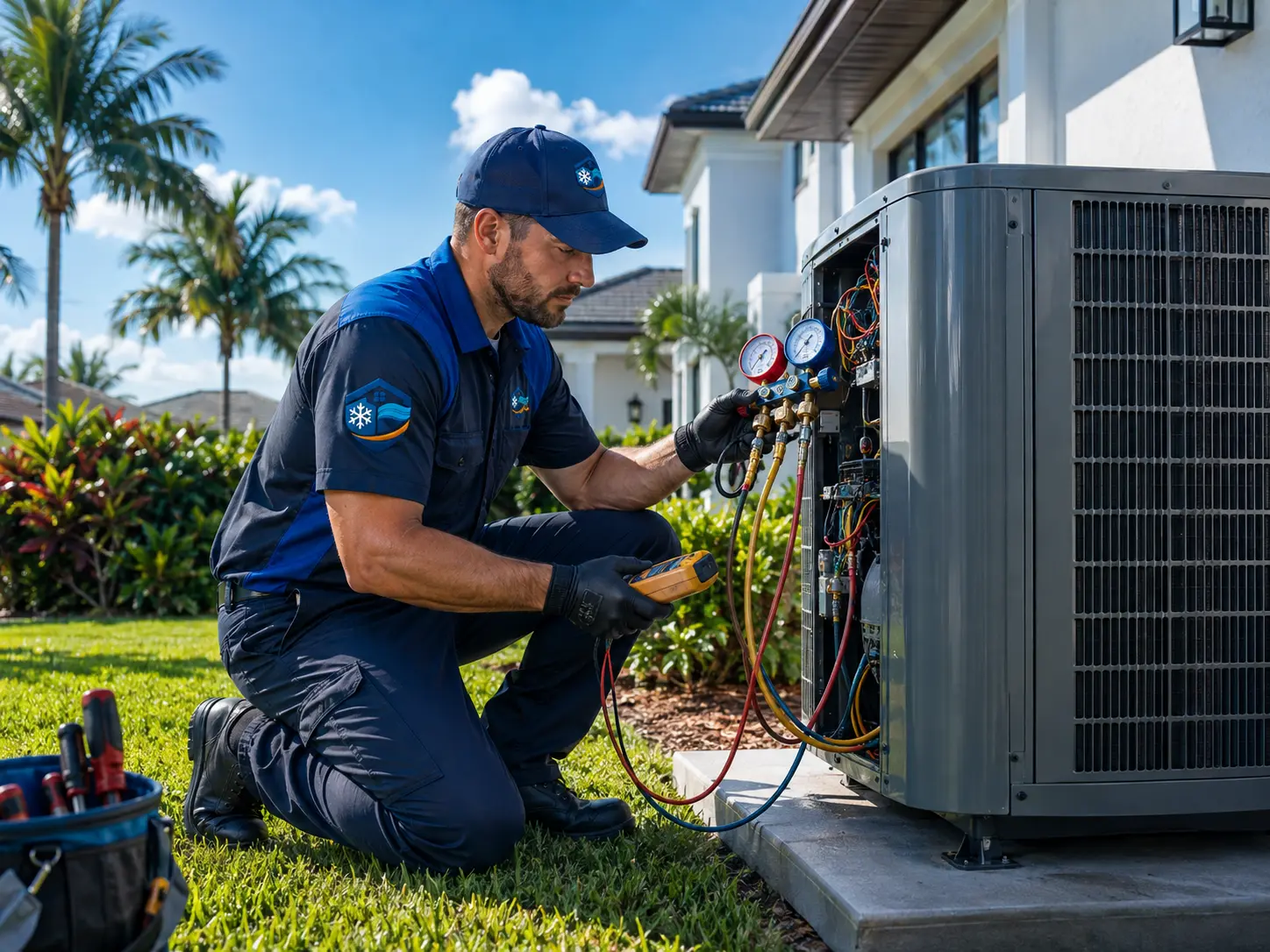
Contactor, capacitor, and compressor
The contactor is an electrically controlled switch inside the outdoor unit. When the thermostat calls for cooling, a low-voltage signal energizes the contactor's coil, which pulls its contacts closed and sends full power to the compressor and condenser fan. Pitted, burnt, or corroded contacts — accelerated in Cape Coral's humid, salt-influenced air — can prevent that connection from closing reliably, leaving the outdoor unit unpowered even though the thermostat is sending the correct signal.
The run capacitor stores and releases the electrical charge that gets the compressor and condenser fan motor spinning and keeps them running efficiently. A weakening capacitor can still let a fan limp along slowly, but a fully failed one often prevents the compressor from starting at all, even while the fan spins. Without the compressor running, there's no refrigerant compression happening, so the system produces no meaningful cooling regardless of how well the blower moves air.
The compressor itself can also fail electrically or mechanically — a seized compressor, a tripped internal overload, or an open winding all stop it from running, and none of those failures are visible from outside without electrical testing.
Refrigerant and controls
When the unit runs but still can't cool
If the outdoor fan is spinning and the compressor sounds like it's operating, but supply air is still warm or only weakly cool, refrigerant charge is the next likely cause. A system that has lost charge to a leak can't absorb heat from indoor air at its designed rate, so even a fully functioning compressor and fan produce a diminished — or in a severe leak, negligible — cooling effect.
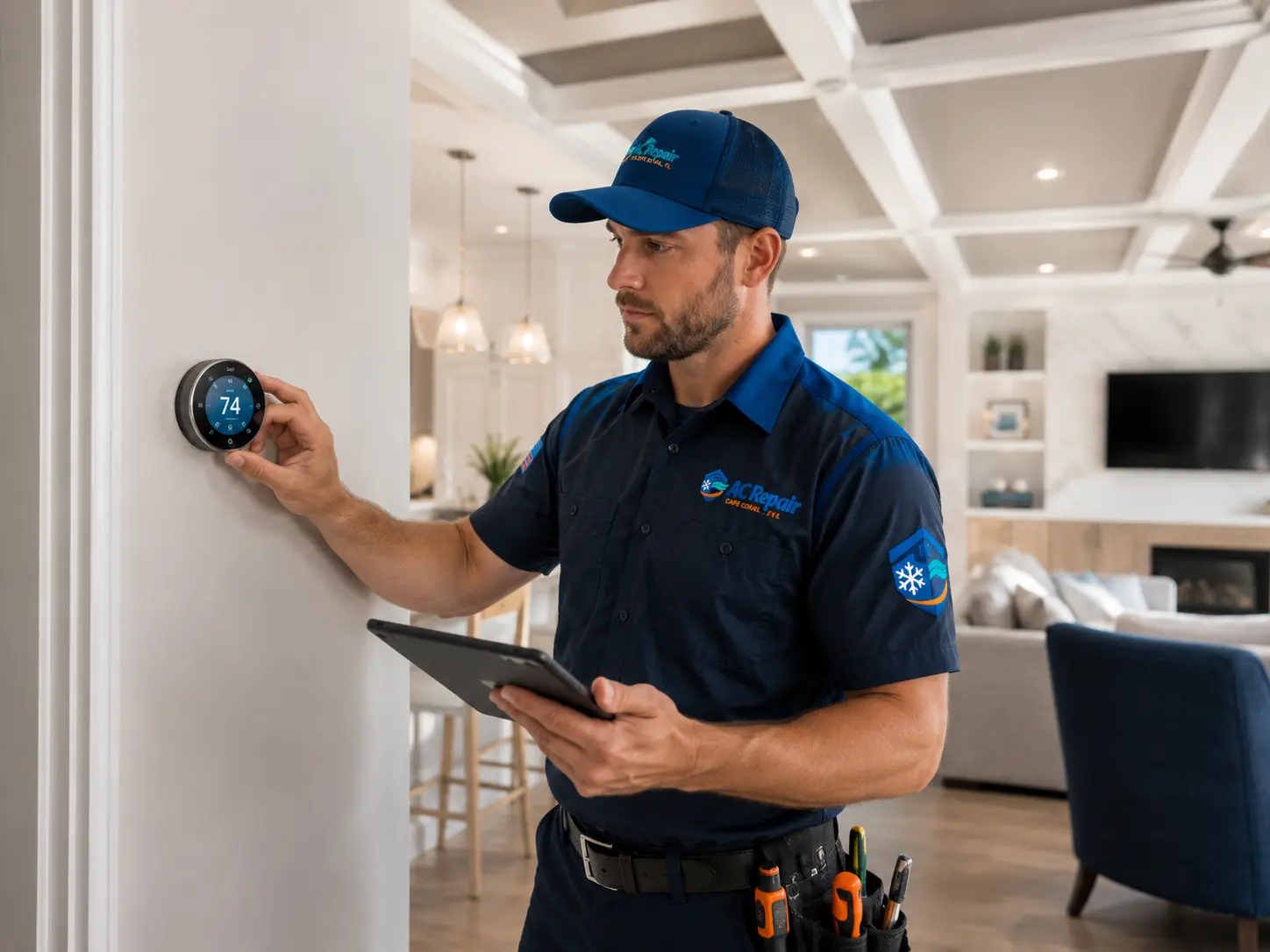
Thermostat mode is worth ruling out before assuming a mechanical fault, since it takes only a few seconds and is easy to overlook. Confirm the system mode is actually set to Cool, not Heat or a schedule that's currently favoring heat, and confirm the fan setting is Auto rather than On. A fan left in the "On" position runs continuously, including between cooling cycles, and will circulate warm room air through the vents at those times even though the system itself is working correctly.
Heat pumps and the reversing valve
Heat pumps cool and heat using the same refrigerant circuit, switching direction with a reversing valve. That valve is controlled by a solenoid that shifts a slide inside the valve body to route refrigerant one way for cooling and the other for heating. If the valve sticks in the heating position, or its solenoid fails, the system can continue operating — compressor running, fans spinning — while stuck delivering heat instead of cooling, which shows up as warm air even with the thermostat correctly set to Cool.
Frequently asked questions
01Why is my thermostat set to cool but the air coming out is warm?
The blower can run and move air through the ducts even when the outdoor condenser unit isn't running or isn't producing cold refrigerant. Warm supply air almost always means the indoor fan is working while the part of the system that actually cools the air — the compressor, condenser, or refrigerant circuit — isn't.
02How do I check if the outdoor unit is running at all?
Walk outside to the condenser while the thermostat calls for cooling. You should hear a fan running and feel warm air discharging from the top. If it's silent and the fan isn't spinning, that points toward a power, breaker, capacitor, or contactor problem rather than a refrigerant issue.
03Could a tripped breaker really cause warm air instead of no air at all?
Yes. If the breaker feeding the outdoor unit trips while the indoor breaker stays on, the blower keeps running and pushing air through the house, but with the compressor and condenser fan dead, none of that air gets cooled.
04What does a contactor do, and how does it cause this?
The contactor is an electrically controlled switch that closes to send power to the compressor and condenser fan when the thermostat calls for cooling. Pitted or burnt contacts, or a coil that's failed, can prevent that switch from closing, leaving the outdoor unit dead while the indoor blower runs normally.
05Is warm air ever a refrigerant problem instead of an electrical one?
Yes. If the outdoor unit is running — fan spinning, compressor audibly on — but the air is still warm or only mildly cool, that points toward reduced refrigerant charge, a restriction in the refrigerant circuit, or a failing compressor rather than an electrical fault.
06My thermostat is a heat pump — could it be stuck in heating mode?
Yes, and this is specific to heat pumps. A reversing valve directs refrigerant flow to either heat or cool the home. If that valve sticks or its solenoid fails, the system can continue running while stuck on the wrong cycle, producing warm air even with the thermostat correctly set to cool.
07Should I check the thermostat mode before calling for service?
Yes — it takes a few seconds and rules out the simplest cause. Confirm the system is set to Cool, not Heat or Auto in a way that's currently favoring heat, and confirm the fan setting is on Auto rather than On, since a fan set to run continuously will push warm room air through the ducts between cooling cycles.
Related repair services
Related symptoms
Cape Coral, FL
Your AC shouldn't be a guessing game.
Describe what the system is doing and get a straight explanation of what needs to happen next.