
Electrical repairs
AC Compressor Repair
- Electrical + mechanical testing
- Root-cause diagnosis
- Cape Coral, FL
Quick answer
The compressor is the heart of the refrigerant circuit, and diagnosing a suspected compressor failure means testing both its electrical windings and its mechanical condition — because compressor failure is very often a symptom of a different underlying problem rather than a random part wearing out.
Getting an accurate diagnosis before deciding on repair or replacement prevents paying to fix a part while the actual cause is left untouched.
Electrical testing
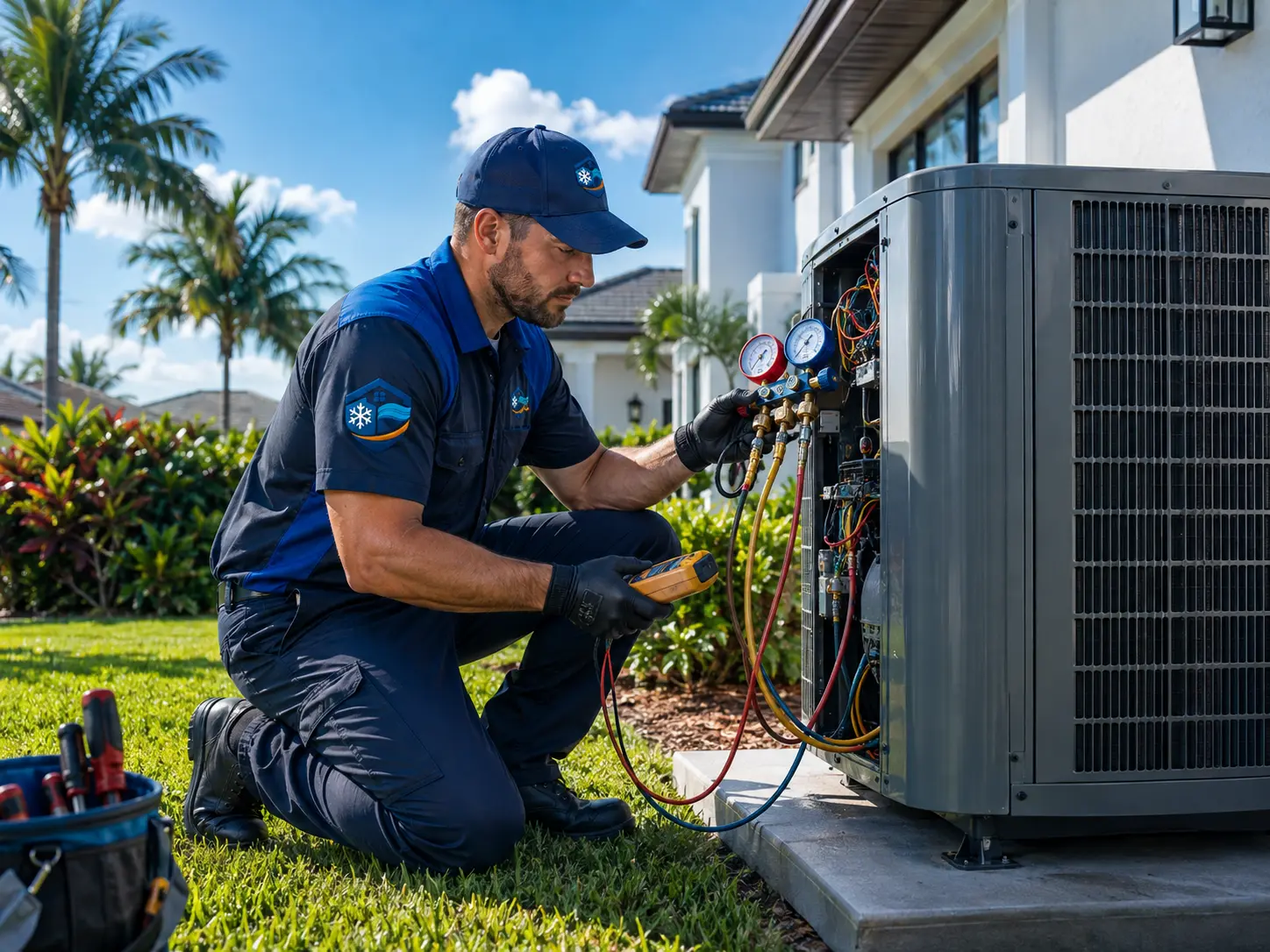
A compressor has three internal windings — common, start, and run — accessed through terminals on the compressor housing. A technician measures resistance between each pair of terminals with a meter to check for three specific fault conditions:
- Grounded winding. Resistance between a terminal and the compressor's metal shell indicates the winding insulation has broken down and is shorting to the case — usually from overheating.
- Open winding. Infinite resistance between two terminals that should show a measurable value means a winding has broken internally, often from a severe overcurrent event or mechanical failure.
- Shorted winding. Resistance that's abnormally low between terminals suggests winding turns have shorted against each other, which will draw excess current and trip protection quickly.
Amperage draw is checked against the compressor's rated load and locked rotor amperage figures, and supply voltage is confirmed to be within the compressor's tolerance — undervoltage and overvoltage both stress a compressor over time.
Mechanical failure signs
Locked rotor
A locked rotor means the compressor motor is energized and pulling very high current, but the internal mechanism cannot physically turn. It typically trips the breaker or an internal overload protector within seconds. Causes range from long-term mechanical wear to refrigerant migrating into the compressor oil during an off cycle and diluting lubrication at startup.
Slugging
Slugging is liquid refrigerant entering the compression chamber instead of vapor. Because liquid can't be compressed the way vapor can, the mechanical result is sudden, often severe damage — bent connecting rods, cracked valves, or a cracked compressor shell in extreme cases. It's usually a downstream sign of an overcharged system, a failed or misadjusted metering device, or poor refrigerant migration control.
Acid and burnout
Severe winding overheating can break down motor insulation and generate acid and other byproducts that contaminate the refrigerant and oil throughout the entire system — not just inside the compressor. A confirmed burnout requires cleaning the refrigerant circuit thoroughly, often with suction-line filter driers and repeated flushing, before a replacement compressor is installed; otherwise, the contamination damages the new compressor as well.
Oil analysis
Drawing a small sample of the compressor's refrigerant oil and inspecting it for acid content, moisture, and metal particulate adds another data point confirming whether internal overheating, contamination, or mechanical wear occurred.
Compressor failure is usually a symptom
Compressors are built to run for many years under normal operating conditions. When one fails prematurely, the more common story is that something else in the system pushed it past its tolerances first: a slow refrigerant leak that ran the system at abnormally high superheat for months, restricted airflow across the condenser coil that drove head pressure up, a failing capacitor or contactor forcing repeated hard starts, or an electrical supply issue. Diagnosing and correcting that root cause matters — replacing a compressor without addressing what killed it usually just delays the same failure again.
Repair vs. replace
A confirmed compressor failure is one of the bigger decision points in a system's life. Relevant factors include the age and overall condition of the rest of the system, whether the root cause has been identified and can be corrected, the refrigerant type the system uses, and whether any manufacturer warranty coverage still applies to the compressor. None of that can be evaluated honestly without a proper diagnosis first — see the repair or replace guide for a fuller comparison framework.
Frequently asked questions
01What does a compressor diagnosis actually check?
A technician tests the winding resistance for each of the three compressor terminals to check for a grounded, open, or shorted winding, checks amperage draw against the compressor's rated values, verifies it's receiving correct voltage and control signals, and evaluates suction and discharge pressures against expected values for the refrigerant and ambient conditions.
02What is a locked rotor and what causes it?
A locked rotor is a compressor that can't turn — the motor is energized and drawing very high current, but the internal mechanism is physically seized. Causes include mechanical wear, refrigerant migration diluting the internal oil, or long-term operation without adequate lubrication. A locked compressor typically trips the breaker or overload protector quickly.
03What does slugging mean and why does it damage a compressor?
Slugging happens when liquid refrigerant — instead of vapor — enters the compressor's suction line and gets pulled into the compression chamber. Liquid doesn't compress, so it can bend connecting rods, crack valves, or otherwise cause immediate mechanical damage. It's usually caused by an overcharged system, a failed metering device, or oil migration issues.
04Is compressor failure usually caused by the compressor itself?
Not usually. Compressors are heavily engineered components, and outright compressor failure is frequently the downstream result of something else: a long-running refrigerant leak causing high superheat and overheating, electrical issues from a failed capacitor or contactor, restricted airflow raising head pressure, or acid formation from a prior burnout. Diagnosing the root cause matters as much as diagnosing the compressor.
05What is a burnout and why does it matter for a replacement?
A burnout occurs when compressor windings overheat severely enough to break down the insulation and contaminate the refrigerant oil with acid and combustion byproducts. If a burnout is confirmed, the entire refrigerant circuit needs to be cleaned out with filter driers and, in some cases, repeated flushing before a new compressor is installed — otherwise the acid contamination will damage the replacement too.
06How does oil analysis help with compressor diagnosis?
Pulling and inspecting a small oil sample can reveal acid contamination, moisture, or metal particles that point toward burnout, prior overheating, or internal mechanical wear. It's one more data point used alongside electrical and pressure testing to understand what actually happened inside a failed compressor.
07How is repair vs. replace decided for a bad compressor?
The decision weighs the age and overall condition of the system, whether the failure is isolated to the compressor or reflects a systemic problem (like recurring leaks or long-term electrical stress), the type of refrigerant the system uses, and any applicable manufacturer warranty coverage on the compressor itself. See the repair or replace guide for the fuller comparison.
Related repair services
Related symptoms
Where we publish AC repair information
Cape Coral, FL
Suspect a bad compressor?
Get proper electrical and mechanical testing before committing to a repair or replacement decision.