Southwest Cape · canal grid
AC Repair in Pelican, Cape Coral FL
- Canal-front housing stock
- High salt air exposure
- Elevated latent humidity load
Quick answer
Pelican sits deep in Cape Coral's southwest canal system, and that proximity to open water is the single biggest factor in how outdoor AC equipment ages here. Salt-bearing air corrodes condenser coils and cabinet hardware faster than inland neighborhoods, and the added humidity keeps the indoor coil working harder than the thermostat setting suggests.
Why condensers fail early near Pelican's canals
Pelican's canal grid puts many homes within a short distance of open, brackish water, and prevailing breezes over that water can carry fine salt particulate onto the coil fins and cabinet of a nearby outdoor unit. Left unaddressed, that residue reacts with aluminum fin stock and steel fasteners, and the corrosion pattern shows up first as white oxide buildup on the fins, then as pitting on screws, contactors and the cabinet's sheet metal seams.
A corroded condenser coil rejects heat less efficiently. The refrigerant leaving the compressor can't shed as much heat to the outside air, so head pressure runs higher and the compressor works longer to deliver the same cooling. That can show up as longer run times and a system that seems to "run all day" even though nothing has obviously broken.
Humidity load on canal-front homes
Waterfront lots draw in more moisture-laden air than blocks further from the canal grid. That extra latent load falls on the evaporator coil, which has to condense more water vapor to hold the same indoor humidity target. When a system is undersized for that load, or the coil is already partially fouled, indoor humidity creeps up even while the temperature reads fine on the thermostat — a clammy feel in the house is often the first sign, well before warm air shows up.
What a diagnostic visit should cover near the canals
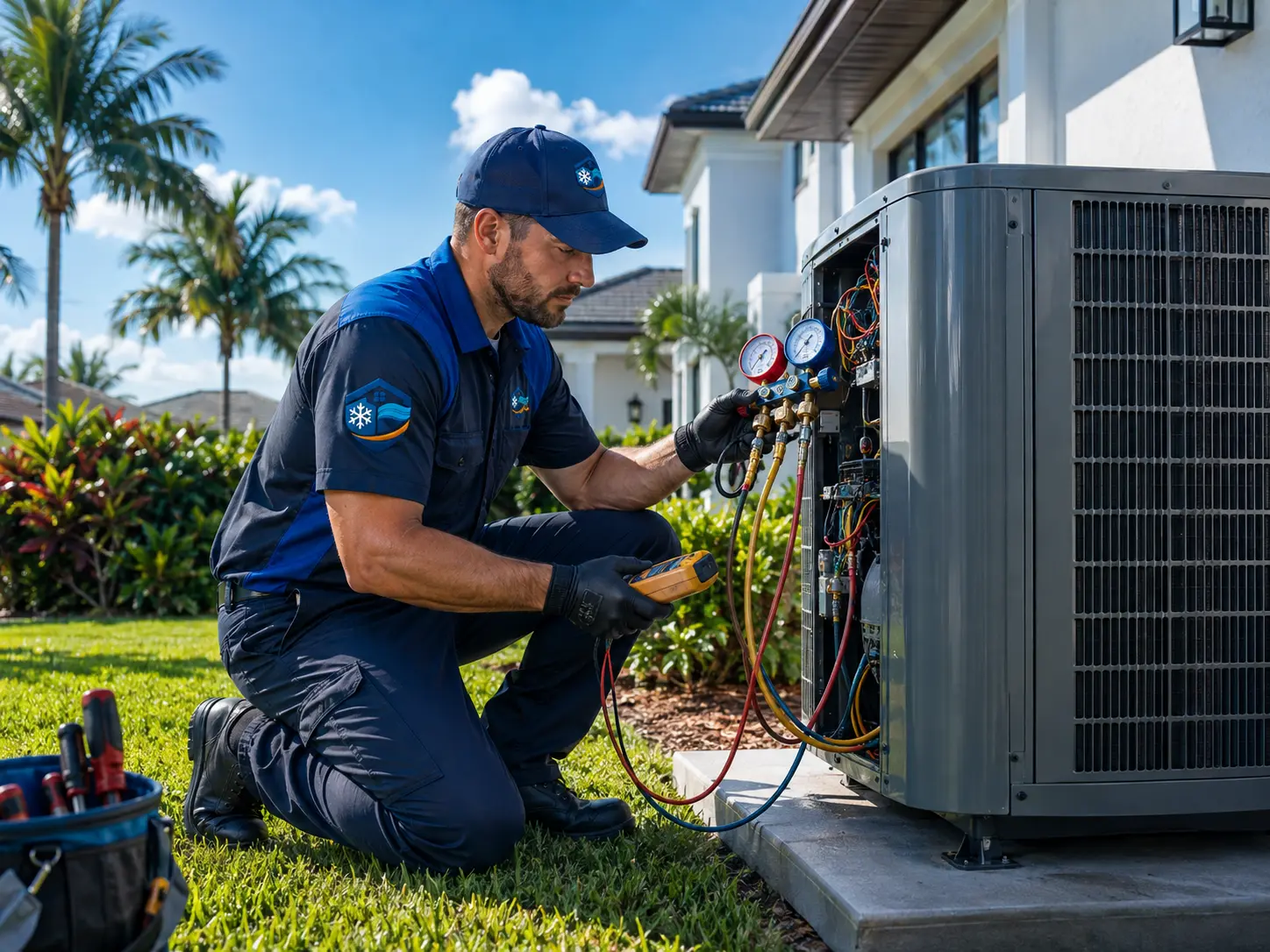
Given the corrosion risk that comes with proximity to open water, a diagnostic visit near the canals should spend time on the outdoor unit: coil fin condition, contactor and disconnect corrosion, refrigerant line insulation, and whether the cabinet base has trapped standing moisture. Indoors, the check should cover coil condition, condensate drain flow, and whether the system's rated capacity still fits the humidity load a waterfront lot can place on it.
Frequently asked questions
01Why does my condenser corrode so fast in Pelican?
Pelican's canal grid puts most homes within a short distance of open water, so the outdoor unit's coil, fins, cabinet screws and electrical contacts sit in salt-laden air continuously. That accelerates oxidation on the aluminum fins and steel fasteners well before the compressor itself is worn out.
02Does canal-side humidity change how hard my AC works?
Yes. Homes backing up to canals draw in air with a higher moisture content than inland blocks. The evaporator coil has to remove more latent heat to hold the same indoor humidity, which adds runtime even when the temperature split looks normal.
03Should the outdoor unit be relocated away from the seawall?
Not usually just for corrosion reasons, but placement matters. A condenser facing prevailing water-side wind gets more salt deposit than one shielded by the house or landscaping. If a unit is failing early and sits directly exposed, that's worth discussing during a repair visit.
04What maintenance actually slows salt air damage?
Regular rinsing of the coil fins with fresh water, keeping the cabinet free of standing moisture, and prompt attention to any fastener or contactor showing rust are the practical steps. None of that reverses existing corrosion, but it slows how fast it spreads.
Related repair services
Related symptoms
Where we publish AC repair information
Cape Coral, FL
Salt air doesn't wait for spring maintenance.
If your Pelican system is running longer or the house feels muggy despite a normal temperature, get the outdoor unit and coil checked before a small corrosion problem becomes a failed compressor.