
Refrigerant + coil repairs
Refrigerant Leak Repair
- Sealed system
- Leak detection + repair
- Cape Coral, FL
Quick answer
A refrigerant circuit is sealed and isn't designed to lose charge over time. If a system needs refrigerant added, it's leaking somewhere, and finding + sealing that leak — not just topping off the charge — is what actually fixes the problem.
Proper leak repair involves locating the leak, repairing it, verifying the repair holds, pulling a vacuum, and recharging with a weighed amount of refrigerant matched to the system.
Why topping off isn't a repair
Central AC systems are closed-loop, sealed refrigerant circuits. Refrigerant circulates between the evaporator coil, compressor, condenser coil, and metering device without being consumed — the same charge should, in theory, last for the life of the system. When a technician finds a system low on refrigerant, that refrigerant went somewhere, and it left through a leak point in the sealed circuit.
Adding refrigerant without addressing the leak restores cooling temporarily, but the leak rate typically stays roughly constant, so the system will run low again — sometimes within weeks, sometimes over a season, depending on the size of the leak. Meanwhile, running a system at low charge drives the compressor to work harder and hotter, which is one of the ways refrigerant leaks eventually contribute to compressor failure if left unaddressed.
Common leak locations
- Evaporator coil. The indoor coil is a frequent leak site, often from formicary corrosion — tiny, tunnel-like pinholes caused by certain airborne compounds reacting with the copper tubing over time.
- Line set. The copper lines running between the indoor and outdoor units can develop leaks at rub points, bends, or where insulation has failed and allowed moisture and corrosion to reach the copper.
- Schrader valves. The small spring-loaded valve cores at the service ports where gauges connect are a common, often minor, leak point — sometimes from a worn seal or a core that wasn't fully tightened after prior service.
- Brazed joints. Where copper lines were originally joined by brazing, a poor-quality joint or one stressed by vibration or corrosion over time can develop a slow leak.
- Service valves. The valves at the outdoor unit where the line set connects can leak at the valve stem or seal, particularly on older equipment.
How leaks are found
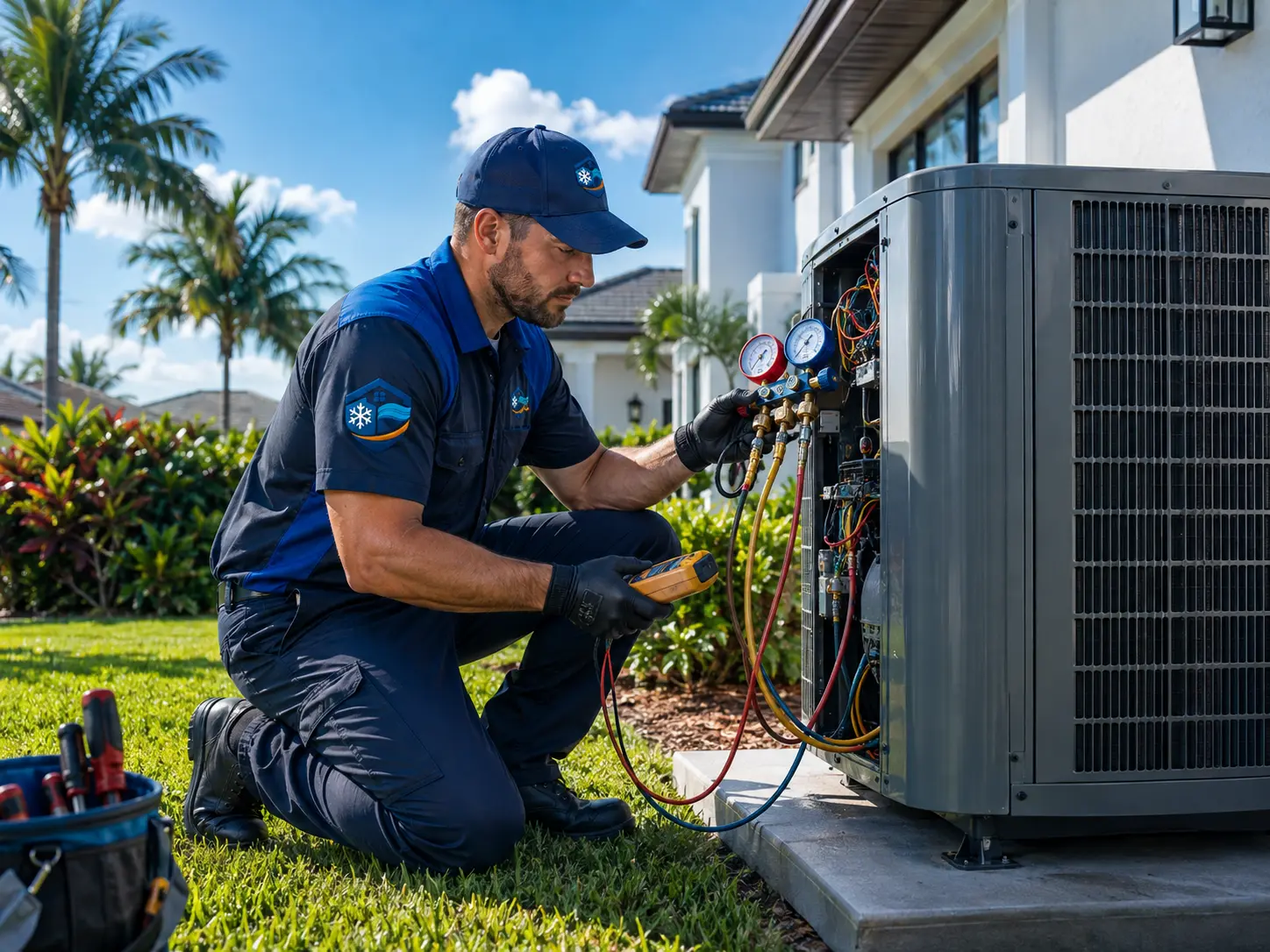
- Electronic sniffer. A handheld sensor detects refrigerant vapor concentration at suspected points along the line set, fittings, and coil.
- Bubble solution. A soap-based solution applied to fittings and joints reveals a leak visually as bubbles form where refrigerant is escaping under pressure.
- Nitrogen pressure test. The system is isolated and pressurized with dry nitrogen, then monitored over time; a pressure drop confirms a leak exists somewhere in the tested section even before it's pinpointed.
- UV dye. A dye additive circulates with the refrigerant and fluoresces under UV light at the leak point, useful for slow or intermittent leaks that are hard to catch with other methods.
Evacuation, weighed charge, and EPA rules
Once a leak is repaired, the affected section is pressure tested again to confirm the repair holds. The system is then evacuated with a vacuum pump to remove air and moisture from the circuit — moisture left in a refrigerant system can form acids and ice inside the metering device. Finally, refrigerant is recharged by weight, using a scale to add the exact amount specified for that system rather than charging by "feel" or pressure alone.
Refrigerant recovery and handling are regulated under EPA rules that prohibit knowingly venting refrigerant into the atmosphere during service, maintenance, or disposal. Recovered refrigerant must be captured with certified equipment. Refrigerant type also matters for cost: phase-down regulations on certain refrigerants have reduced their availability over time, which is a relevant factor when weighing leak repair against replacement on an older system.
Frequently asked questions
01Why isn't adding refrigerant enough to fix low cooling?
A residential AC system is a sealed circuit that isn't designed to consume refrigerant. If the charge is low, refrigerant has leaked out somewhere, and it will keep leaking out at roughly the same rate after a top-off. Adding refrigerant without finding and sealing the leak treats the symptom while the actual problem keeps running.
02Where do refrigerant leaks usually happen?
Common points include pinholes in the evaporator coil (often from formicary corrosion), fittings and flare connections in the line set running between indoor and outdoor units, Schrader valve cores at the service ports, brazed joints where copper lines were originally soldered together, and the service valves at the outdoor unit itself.
03How do technicians actually find a refrigerant leak?
Common methods include an electronic leak detector (a sniffer) that senses refrigerant vapor at suspected points, bubble solution applied to fittings and joints that reveals a leak as forming bubbles, and pressurizing the system with nitrogen and monitoring for a pressure drop over time, which can reveal even small leaks. UV dye injected into the system and viewed under a UV light is another option for slow or hard-to-find leaks.
04What happens after a leak is found and repaired?
The repaired section gets pressure tested again to confirm the fix holds, then the system is evacuated with a vacuum pump to remove air and moisture from the circuit, and finally recharged with a weighed, measured amount of refrigerant matched to the system's specifications rather than charged by guesswork.
05Is it legal to just let refrigerant vent into the air?
No. EPA regulations under the Clean Air Act prohibit knowingly venting refrigerant during installation, maintenance, or disposal of AC equipment. Refrigerant must be properly recovered using certified equipment, and handling refrigerant requires EPA Section 608 certification — which is one more reason leak repair is not a DIY project.
06Does the type of refrigerant my system uses affect the repair?
Yes. Refrigerant phase-down regulations have reduced production of some older refrigerant types over time, which affects cost and availability for systems still using them. This is a relevant factor when weighing a leak repair against replacing an older system, particularly if the system uses a refrigerant being phased down.
07Can a small leak wait, or does it need immediate attention?
A slow leak that's already reduced the charge enough to affect cooling is actively damaging the system further the longer it runs — low charge drives up compressor temperatures and can lead to coil freezing. It's not usually an emergency in the way a total system failure is, but it shouldn't be left unaddressed for an extended period.
Related repair services
Related symptoms
Where we publish AC repair information
Cape Coral, FL
System keeps needing refrigerant added?
Recurring low charge means an active leak. Get it located and sealed instead of topping off again.