Drainage + Humidity Problems
AC Drain Line Repair
- Condensate system
- PVC drain lines
- Float switch safety
Quick answer
The condensate drain carries away the water your evaporator coil pulls out of the air — a heavy, near-constant volume in Cape Coral's climate. Algae, sediment and biofilm narrow the PVC line until it slows or stops, the float switch trips, or the pan overflows. Clearing the restriction and confirming the trap, vent and switch are working correctly resolves it.
A Florida system moves a lot of water
Air conditioning removes both heat and moisture. In a climate as humid as Cape Coral's, the latent (moisture-removal) load on a residential system is large for most of the year, not just in the height of summer. That means the evaporator coil is condensing water almost every hour the compressor runs, and all of that water has to go somewhere. On a hot, humid afternoon a normally sized system can produce several gallons of condensate — enough that even a partially restricted line shows symptoms quickly.
That water collects in a drain pan under the evaporator coil, then leaves the air handler through a PVC drain line. Most residential installations use a trap near the air handler outlet to hold a water seal — this keeps the blower from pulling air backward through the line and disturbing airflow across the coil — followed by a vent tee that lets air escape so the line drains by gravity instead of fighting a vacuum. From there the line runs to an exterior termination point, sometimes with a secondary run tied to an emergency pan under an attic air handler.
Why the line clogs
The inside of a condensate line is warm, dark, wet and rarely disturbed — close to ideal conditions for algae, mold and bacterial biofilm. That growth builds up on the pipe wall and collects around the trap, where flow slows and debris settles. Add in dust, insulation fibers and construction debris that finds its way into the pan, and a line that started with a generous slope can narrow to a fraction of its working diameter over a season or two.
Because Cape Coral systems run near year-round, that biological growth doesn't get a seasonal break the way it might in a climate with a shorter cooling season. A line that isn't flushed periodically will eventually restrict enough to slow drainage well before it fully blocks.
The float switch is a safeguard, not the problem
When water backs up in the pan or the line itself, a float switch rises with it and opens the low-voltage circuit that lets the system run. That shuts the compressor and, on many installations, the whole system down before water reaches the point of overflowing into a ceiling or closet. A tripped switch is telling you the drain is restricted upstream — resetting or bypassing it without clearing the restriction just delays the same failure and risks water damage.
Secondary drain pans
Air handlers installed in an attic typically sit in a secondary drain pan with its own independent line or switch, precisely because a leak or overflow there has nowhere else to go but through the ceiling below. If water shows up in that secondary pan, it means the primary system has already failed to keep up — treat it as the same urgency as active water leaking from the unit.
How a restriction gets cleared
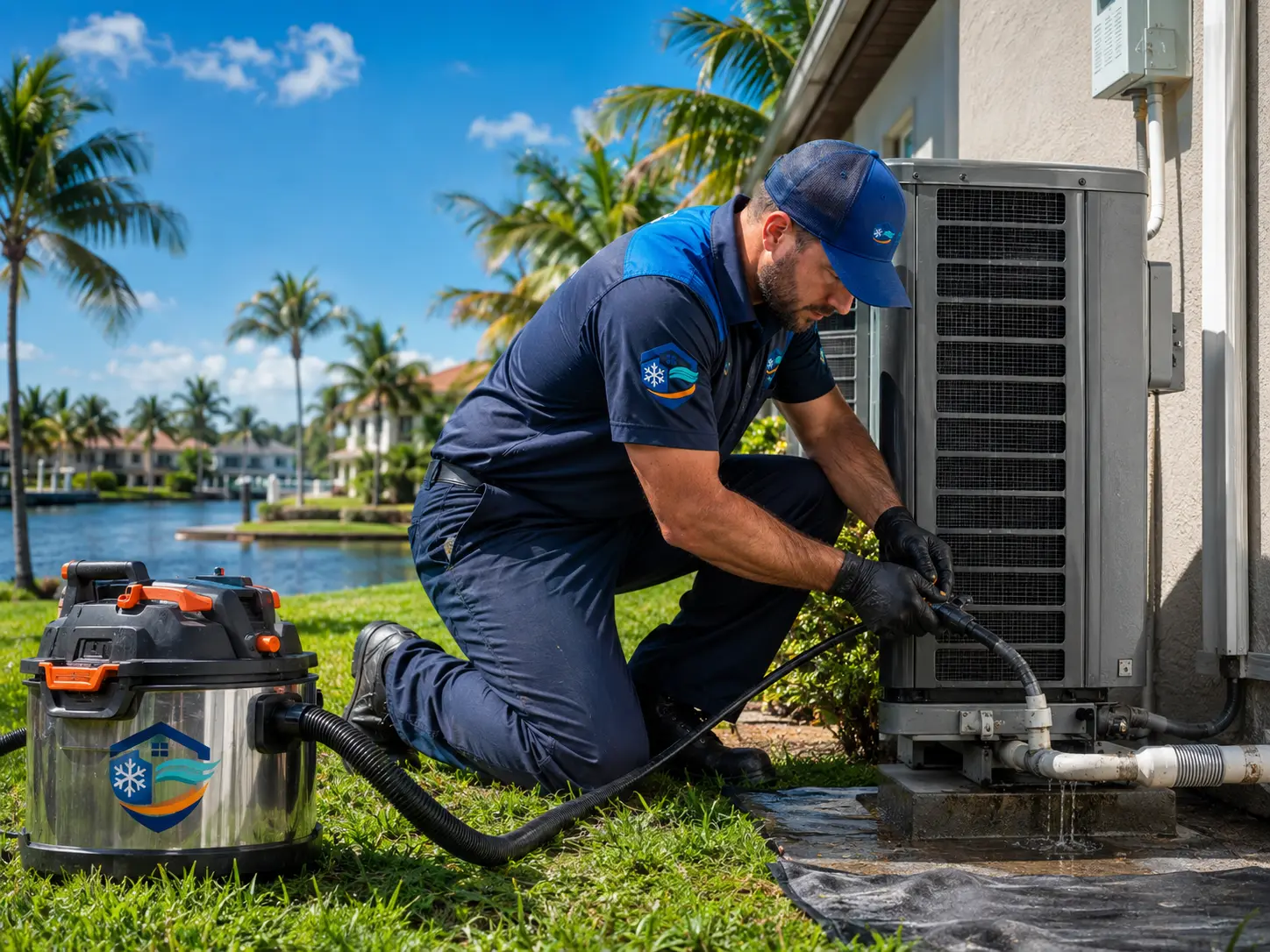
Wet/dry vacuum
Applied at the exterior termination, a vacuum pulls the clog and standing water back out through the line — usually the fastest way to restore flow on a fully stopped line.
Nitrogen or air purge
Pressurized nitrogen pushed through the line from the air handler end can dislodge stubborn biofilm and sediment that a vacuum alone can't reach, especially around a trap.
Drain brush / flexible rod
A flexible brush worked through the accessible cleanout mechanically scrubs buildup off the pipe wall rather than just pushing it through.
Maintenance that slows the problem
Algaecide tablets set into the drain pan access point help suppress biological growth between service visits, and a periodic flush — vinegar or a mild bleach solution through the vent tee, or a professional flush during a maintenance visit — keeps buildup from reaching the point of restriction. Given how much condensate a Cape Coral system produces across the year, this is one of the higher-value habits for avoiding an unplanned shutdown or a ceiling leak.
Warning signs before the line fully stops
A gurgling sound from the drain pan area, a musty smell near the air handler, water draining more slowly than usual at the outside termination, or indoor humidity creeping up with no thermostat change are all early indicators. Catching a restriction at this stage is a quick flush — waiting for the float switch to trip means the system has already gone down.
Frequently asked questions
01How much condensate does a Cape Coral AC actually produce?
A typical residential system can pull several gallons of water out of the air on a humid day. Cape Coral's high latent load keeps that volume high nearly year-round, which is why the drain line here works harder than the same system would in a drier climate.
02Why does the drain line grow algae and biofilm?
The condensate pan and PVC line stay wet, dark and warm almost continuously — ideal conditions for algae, mold and bacterial slime. That biofilm builds on the pipe walls and around the trap until it narrows the passage enough to slow or stop flow.
03What does the float switch actually do?
It sits in the drain pan or the line itself and opens the low-voltage circuit to the thermostat when water rises too high. That shuts the system down before the pan overflows into the ceiling or closet. A tripped float switch is doing its job — the fix is clearing the restriction, not bypassing the switch.
04Can I clear a condensate line myself?
Flushing the cleanout with a shop vac at the outside termination, or pouring a small amount of distilled vinegar through the access tee, is a reasonable homeowner step on a line that is only starting to slow. A line that has already stopped, or one you cannot access safely, needs a technician with a wet/dry vacuum, nitrogen purge or drain brush.
05Are condensate treatment tablets worth using?
Algaecide tablets placed in the drain pan access point help slow biological growth between cleanings. They are a maintenance aid, not a substitute for periodically flushing the line, especially in a climate that runs condensate this heavily.
06What warns me a restriction is forming before the system shuts down?
A gurgling sound from the drain, a musty smell near the air handler, slower-than-normal drainage at the outside termination, or rising indoor humidity with no change in thermostat setting are all early signs worth acting on before the float switch trips.
Related repair services
Related symptoms
Where we publish AC repair information
Cape Coral, FL
Drain acting up before it overflows?
Describe what you're hearing or seeing at the air handler and get a straight read on whether it's a simple flush or something more.