
Electrical repairs
AC Not Turning On
- Nothing runs
- Electrical + safety switch causes
- Cape Coral, FL
Quick answer
When an AC system won't turn on at all — no outdoor unit, no indoor blower, sometimes not even a thermostat display — the cause is almost always upstream of the cooling components themselves: power delivery, a safety switch, or the low-voltage control circuit.
A handful of checks are safe for a homeowner to make in a couple of minutes. Beyond that, the equipment involves line voltage or capacitors that hold a dangerous charge, and it's time to call for diagnosis.
Start with power delivery
A total no-start almost always traces back to one of two things: the system isn't receiving power, or a safety device is deliberately blocking it from running. Work through power first because it's the fastest thing to check.
Tripped breaker — and why it tripped
Central AC systems typically run on a dedicated double-pole breaker in the main electrical panel. If it's tripped, you can reset it once. If it holds, the system may start normally. If it trips again — especially right when the compressor tries to start — do not keep resetting it. A breaker that trips repeatedly is usually responding to a real fault: a shorted compressor winding, a grounded wire, or a failing capacitor drawing excess current. Repeated resets risk further component damage.
Outdoor disconnect
Most Cape Coral installations have a pull-out or switch-style disconnect mounted on the wall beside the outdoor condenser. It's required for service safety, and it's occasionally left open after maintenance or knocked partially loose by storm debris or lawn equipment. Confirm the disconnect is fully seated, but don't open the enclosure — the terminals inside carry line voltage.
Service switch at the air handler
The indoor air handler or furnace usually has its own switch nearby, sometimes styled like a standard household light switch mounted on or near the unit. It's easy to bump this off during attic or closet work and forget to restore it. Confirm it's in the "on" position.
Safety switches that stop the system on purpose
If power is confirmed and the system still won't run, the next suspect is a safety interlock. These circuits exist to prevent damage, not to be bypassed.
Float or condensate safety switch
A float switch sits in the drain line or the drain pan and opens the low-voltage control circuit when condensate backs up past a safe level. In Cape Coral's humid climate, condensate volume is high year-round, so drain-line algae growth and clogs are common — and a tripped float switch is one of the most frequent reasons a system suddenly stops responding to the thermostat with no other warning. Clearing the drain restriction is the fix, not disabling the switch.
Blown low-voltage fuse on the control board
Most air handlers and furnaces have a small automotive-style fuse on the control board protecting the 24-volt circuit. A short somewhere in the thermostat wiring, a pinched wire, or a failed component can blow this fuse instantly, killing the whole low-voltage system: no thermostat response, no contactor engagement, nothing. A technician can replace the fuse, but if it blows again immediately, there's a short in the circuit that needs to be found before the system is put back into service.
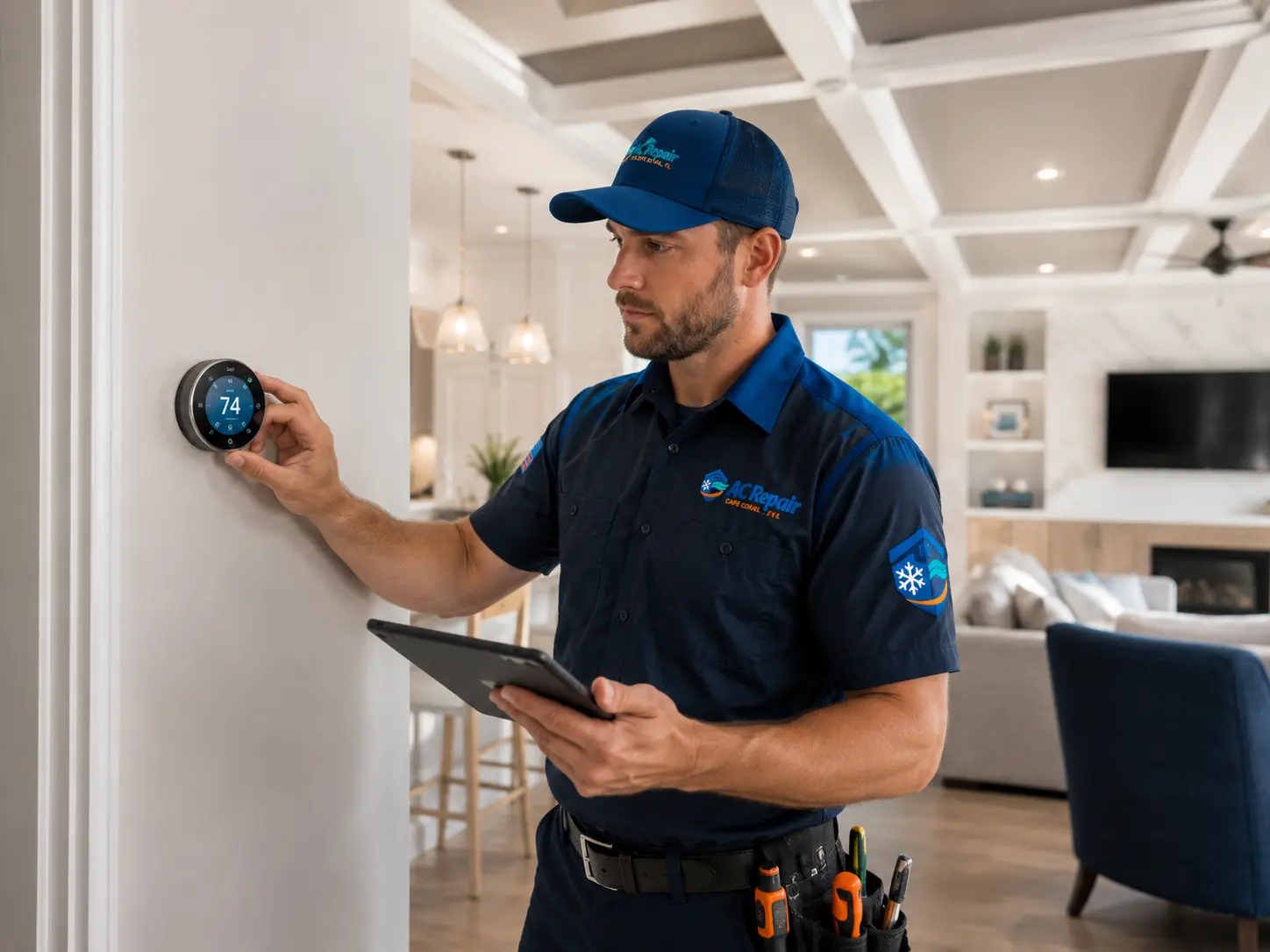
Transformer and thermostat causes
Failed transformer
The 24-volt transformer steps line voltage down to run the thermostat and control circuit. When it fails, everything low-voltage goes dark at once, even though the equipment itself has full power. This is a common outcome of a storm-season voltage spike or a short circuit elsewhere in the control wiring that overloaded it.
Thermostat batteries and wiring
A blank or unresponsive thermostat display is worth ruling out with fresh batteries first — it takes a minute and costs nothing. If the display stays dead, or if it lights up but the system still won't respond to a call for cooling, the fault is more likely in the wiring, the wall plate connections, or the transformer feeding it.
Safe to check yourself vs. stop and call
Safe homeowner checks
- Reset a tripped breaker once and watch for an immediate re-trip.
- Confirm the outdoor disconnect and indoor service switch are fully seated.
- Replace thermostat batteries if the display is blank or dim.
- Check the thermostat mode and setpoint against room temperature.
Stop and call
- A breaker that trips again immediately or repeatedly.
- Any need to open the disconnect enclosure or control board panel.
- A float switch that keeps tripping after the drain is clear.
- A blown low-voltage fuse that blows again after replacement.
Frequently asked questions
01The outdoor unit is dead but the indoor blower still runs. What does that mean?
That's usually not a full 'won't turn on' failure — it points to the condenser side specifically: a tripped breaker on that circuit, a blown outdoor disconnect fuse, a failed contactor, or a bad capacitor. True 'nothing runs' failures usually sit further upstream, at the thermostat, the low-voltage transformer, or a safety switch shared by the whole system.
02Is it safe for me to reset a tripped breaker myself?
Flipping it back on once is reasonable. If it holds, fine. If it trips again immediately or within a few minutes of the compressor trying to start, stop resetting it. A breaker that trips repeatedly is protecting you from a real electrical fault, and repeated resets can damage components or create a fire risk.
03What is the float switch and why would it stop my AC?
It's a small safety device in the condensate drain line or pan that shuts the system's low-voltage control circuit down when water rises too high. It's doing exactly what it's designed to do: preventing an overflow from damaging your ceiling or floor. The fix is clearing the drain restriction, not bypassing the switch.
04My thermostat screen is blank. Is that the whole problem?
Sometimes. Dead batteries or a tripped low-voltage fuse can blank a thermostat display while the rest of the system is fine. Other times a blank thermostat is a symptom of a bigger control problem — a failed transformer or a short somewhere in the low-voltage wiring that's also blowing fuses. Replacing batteries is worth trying first; if the screen stays blank, it needs a technician.
05Where is the service disconnect and do I need to touch it?
It's typically a small metal or plastic box mounted on the wall next to the outdoor condenser, and there's often a similar switch near the air handler indoors. Both need to be fully seated in the 'on' position for the system to run. You can check that they're pushed in, but do not open the disconnect box itself — that exposes line-voltage terminals.
06How do I know if the problem is the transformer?
A failed 24-volt transformer takes down every low-voltage control function at once: thermostat display, contactor coil, float switch circuit — all of it goes dead simultaneously even though line voltage is present at the equipment. That pattern, combined with a dead thermostat that doesn't respond to fresh batteries, points a technician toward the transformer.
07Can storm-related power issues cause a no-start situation?
Yes. Voltage sags, surges, and brief outages during Cape Coral storm season are hard on transformers, control boards, and capacitors. A system that ran fine before a storm and won't start afterward should be checked for storm-related electrical damage rather than assumed to be a coincidental failure.
Related repair services
Related symptoms
Where we publish AC repair information
Cape Coral, FL
System won't respond at all?
Describe what's happening — breaker, disconnect, thermostat, drain — and get a straight read on what's likely going on.