South Cape · older waterfront
AC Repair in Yacht Club, Cape Coral FL
- Established waterfront homes
- Original duct sizing
- Canal-adjacent corrosion exposure
Quick answer
Yacht Club combines two aging factors at once: it's one of South Cape's older waterfront sections, so homes can carry both duct systems sized for older equipment and salt-air exposure from canal frontage. Older construction and waterfront exposure together can raise the odds of airflow restrictions and coil corrosion compared with newer inland construction.
Duct systems built for a different era of equipment
Yacht Club is one of Cape Coral's older established neighborhoods, and its duct systems can reflect the sizing standards and equipment capacities of when the homes were built. Return air openings can be smaller than what current equipment wants, and supply trunks may not have been resized if the AC system itself was upgraded over the years.
The practical effect is a mismatch: a modern, higher-capacity condenser and air handler paired with duct passages that can't deliver the airflow that equipment is designed around. Symptoms include weak airflow at far rooms, a system that struggles to satisfy the thermostat despite adequate refrigerant charge, and coils that ice up because airflow across them is too low.
Original air handler placement
Older construction in this part of Cape Coral can involve an air handler placed in a garage closet or small interior utility space sized for older equipment. When that equipment gets replaced with a larger-capacity unit, a tight original space can restrict service access, filter sizing, and the return duct connection, adding to the airflow issues that older duct runs can already have.
Salt air on top of aging equipment
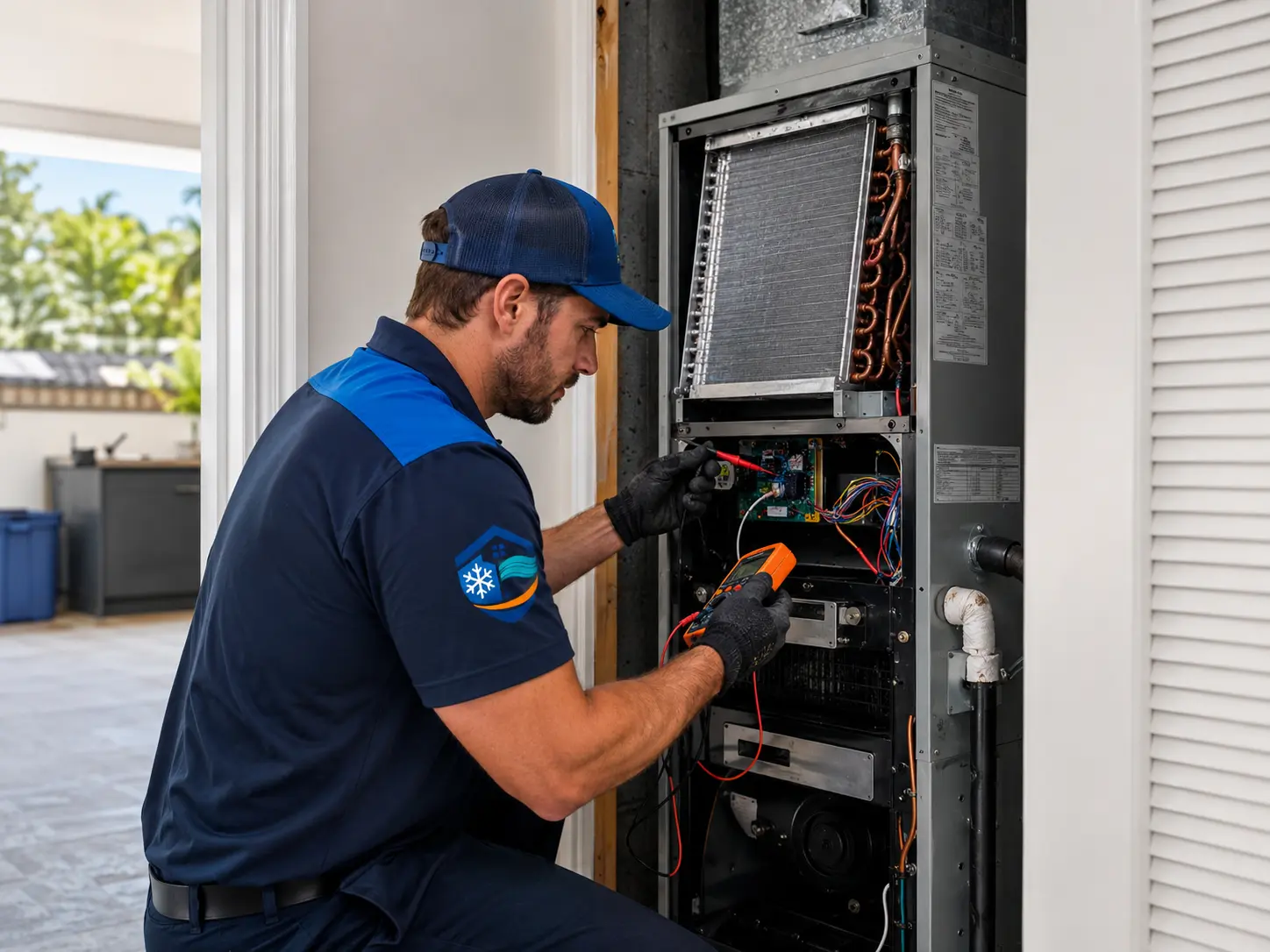
Because Yacht Club also sits along canal frontage, outdoor units here face the same salt-air corrosion pressure as other waterfront neighborhoods. Combined with older equipment that may already be near the end of its service life, corrosion damage on a Yacht Club condenser can tip a repair-versus-replace decision faster than it would on a newer system further inland.
Frequently asked questions
01Why does my Yacht Club home have such a small return grille?
Many homes in this older waterfront section of South Cape were built before current duct sizing practice became standard, with tighter return air pathways than newer construction. An undersized return starves the blower of air, which reduces airflow across the coil and can cause the coil to run colder than it should.
02Is it normal for an older Yacht Club system to run longer than a newer one?
Somewhat, yes. Aging ductwork often has more leakage and less efficient supply runs than current construction, so an older but properly working system can need more runtime to hold the same temperature. What matters is whether the temperature split across the coil and the airflow at the registers are still within normal range.
03Does being close to the water add corrosion risk here too?
Yes. Yacht Club's waterfront lots put outdoor units in the same salt-air exposure as other canal and harbor areas of Cape Coral, so coil and cabinet corrosion should be checked alongside the airflow and duct issues more specific to the neighborhood's older housing stock.
04Where was the air handler likely installed in an older Yacht Club home?
Many original installations placed the air handler in a garage, closet or attic space sized for older, smaller equipment. If a system has been upgraded since, a mismatch between newer equipment airflow requirements and that original space can create airflow and noise problems.
Related repair services
Related symptoms
Where we publish AC repair information
Cape Coral, FL
Older equipment and tight ductwork deserve a proper look.
If your Yacht Club system runs long, freezes up, or struggles to reach far rooms, the cause is often airflow, not just refrigerant. Get both checked together.