
AC maintenance guide
Cape Coral AC Maintenance Guide
- Year-round cooling load
- Homeowner tasks + tune-ups
- Cape Coral, FL
Quick answer
A Cape Coral AC runs longer and handles more moisture than almost anywhere else in the country, which means maintenance here isn't optional housekeeping — it's what keeps a system out of emergency repair territory.
This guide breaks maintenance into what to do monthly, quarterly, seasonally, and annually, plus what a professional tune-up covers that homeowner tasks can't reach.
Why it's different here
Cooling season never really ends
Most of the country gives an AC system a rest in fall and spring. In Cape Coral, cooling runs nearly year-round, and the air being pulled through the system carries far more moisture than in drier climates. That combination — long run hours plus high latent load — means filters load up faster, condensate volume is heavier and more constant, and outdoor coils face steady afternoon solar gain and, near canals and the river, salt-laden air that accelerates corrosion. Maintenance intervals that make sense elsewhere are often too long here.
Monthly
Tasks to do every month
Filter check
Pull the filter and hold it up to a light. If light doesn't pass through evenly, replace it. A standard 1-inch filter in a year-round-cooling home typically needs replacement around every 30 days; homes with pets, tile floors that generate dust, or nearby construction often need checks every two to three weeks.
Drain line check
Look at the outdoor termination point of the condensate line for steady, visible dripping when the system is running, and check the indoor drain pan for standing water. Both are early signs of a forming clog before it becomes a shutdown.
Quarterly
Tasks every three months
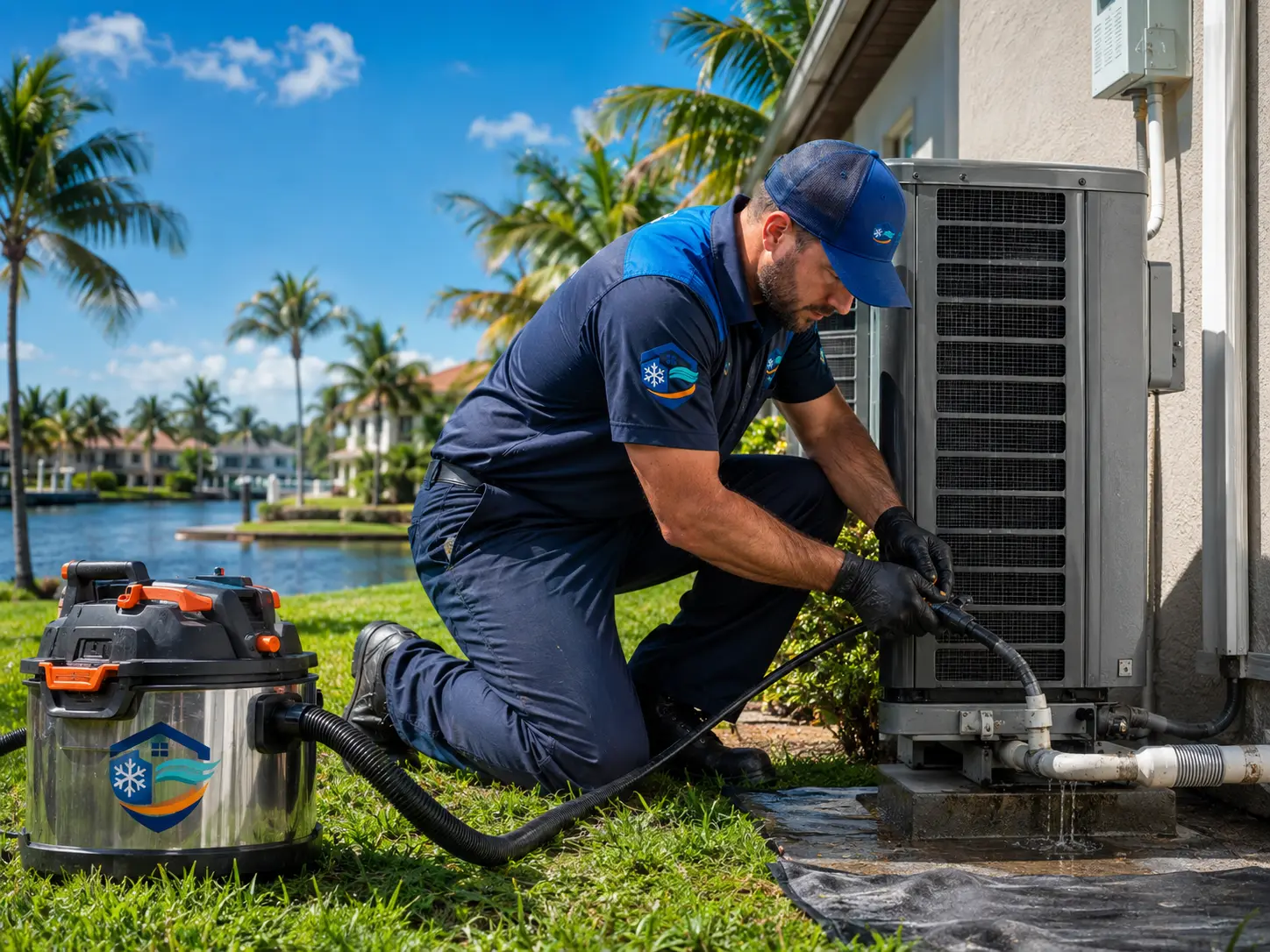
- Flush the condensate line. Pouring a cup of distilled vinegar down the indoor access point (if your system has one) helps slow algae growth inside the line. This is a supplement to, not a replacement for, a full professional line clearing.
- Rinse the outdoor coil. Use a garden hose on a gentle spray, working from the inside of the unit outward, to push accumulated dust, grass clippings, and pollen out of the fins. Never use a pressure washer — the force can flatten the thin aluminum fins and choke off airflow permanently.
- Check outdoor clearance. Keep at least two feet of open space around all sides of the condenser. Trim back landscaping, move stored items, and clear leaves or grass clippings that collect against the cabinet.
- Look for pet hair buildup. Homes with pets often see hair collect visibly on the filter and around return grilles well before a standard filter interval is up — treat visible buildup as your cue to check early.
Seasonal
Storm-season prep and post-storm checks
Before storm season: confirm the outdoor unit's pad or stand is stable and not settling, secure or store loose items near the condenser that could become debris in high wind, and note where the outdoor disconnect is located in case power needs to be cut before a storm.
After a storm: before restoring power, visually check that the outdoor unit is level, free of standing water, and hasn't taken direct impact from debris. Look for a dislodged access panel or bent fins from wind-blown material. On first restart, listen for unusual noises and watch for a breaker that trips immediately — either is a reason to shut back down and call rather than keep resetting it.
Voltage events during storms — surges, brownouts, or rapid power cycling — can also stress electrical components like capacitors and control boards even when the unit looks physically fine. If the system behaves oddly after a storm even with no visible damage, that's worth mentioning at your next service call.
Thermostat + humidity
Setting a schedule that controls humidity
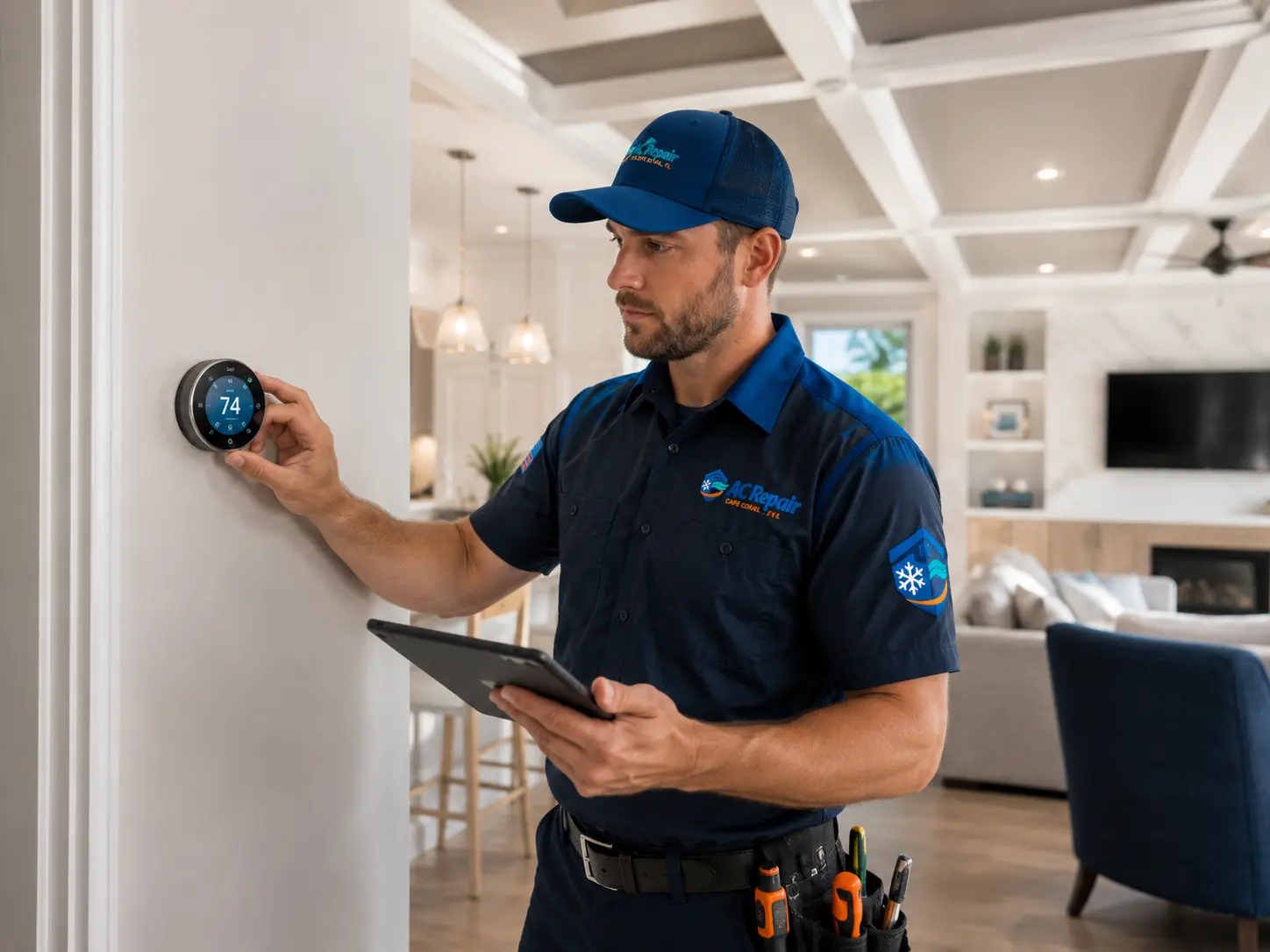
A thermostat schedule with a wide swing — for example, letting the house rise several degrees while away, then dropping it fast when someone's home — forces the system to run in short, powerful bursts to catch up. Short bursts cool the air quickly but don't run long enough to pull much moisture out, since dehumidification happens gradually as air continuously passes over a cold coil.
A narrower swing keeps the system running in longer, steadier cycles that are far more effective at humidity control, which matters in Cape Coral where indoor humidity above comfortable levels shows up quickly as a musty smell, clammy air, or condensation on cool surfaces. If your thermostat supports a humidity readout, keeping indoor relative humidity in a comfortable mid-range is a reasonable target for most homes.
Annual
What a professional tune-up covers
A tune-up reaches inside the system in ways homeowner tasks can't. A thorough visit typically includes checking refrigerant pressures against the system's target charge, testing electrical components — capacitors, contactors, and motor windings — under actual running load rather than just visual inspection, verifying the condensate safety switch trips and resets correctly, inspecting the indoor coil for fouling or early icing signs, and confirming airflow across both the indoor and outdoor coils is within a normal range. This is also the point where small issues — a slightly weak capacitor, a coil starting to foul, a drain line trending toward a clog — get caught before they cause a mid-summer shutdown.
Between visits
Signs worth watching for
- Cooling that takes noticeably longer to reach setpoint than it used to.
- Any water at the air handler, on the ceiling below it, or around the drain pan.
- A new hum, rattle, or grinding sound from the outdoor unit.
- Higher indoor humidity or a musty smell that wasn't there before.
- Ice anywhere on the indoor coil or the refrigerant line set.
Any of these between scheduled visits is worth addressing rather than waiting — see the AC troubleshooting guide for what to check safely and when to stop and call.
Frequently asked questions
01How often should I really change my filter in Cape Coral?
Roughly every 30 days is a common recommendation for a standard 1-inch filter in Cape Coral, since a system here runs nearly year-round and pulls constant humid air through it. Homes with pets, tile dust, or nearby construction often need a check every two to three weeks even between full changes.
02Can I rinse the outdoor coil myself?
Yes, with a garden hose on a gentle setting, sprayed from the inside out to push debris away from the fins rather than into them. Never use a pressure washer — the water pressure can bend the thin aluminum fins flat and permanently reduce airflow through the coil.
03What's the difference between what I can do and what a tune-up covers?
Homeowner tasks are surface-level: filters, coil rinsing, clearance, and drain line pouring. A professional tune-up goes inside the equipment: refrigerant pressure checks, electrical testing under load, condensate switch verification, and coil inspection that requires opening panels and using test equipment.
04Does my thermostat schedule actually matter for humidity?
Yes. Wide temperature swings between an away setting and a home setting force the system to run in short, ineffective bursts when it kicks back on, which cools the air quickly but removes little moisture. A smaller swing keeps run cycles longer and more effective at pulling humidity out.
05What should I check on my AC after a storm?
Confirm the outdoor unit is level and free of standing water, debris, or displaced panels before restoring power. Check for loose wiring at the disconnect if it was exposed to wind-driven rain, and watch for unusual noises or tripped breakers on the first restart.
06How do I know my pet is affecting my filter needs?
If you notice visible pet hair building up on the filter face within two to three weeks, or you see it accumulating on vent covers and furniture near return grilles, your home needs more frequent filter checks than the standard interval.
07Is condensate line maintenance really necessary in Florida?
Yes — arguably more here than almost anywhere else. Cape Coral's constant humidity means the system produces a steady, heavy volume of condensate almost every day of the year, and that steady moisture is exactly what algae and biological growth need to build a clog inside the line.
Related repair services
Related symptoms
Where we publish AC repair information
Cape Coral, FL
Overdue for a tune-up?
Get the parts of maintenance that require test equipment handled properly, before a small issue becomes a summer shutdown.