Central Cape · established blocks
AC Repair in Trafalgar, Cape Coral FL
- Established central blocks
- Aging equipment common
- Original duct layouts
Quick answer
Trafalgar is one of Cape Coral's established central neighborhoods, and a meaningful share of the cooling equipment here has been running for a number of years. That can make wear-item failures — capacitors, contactors, aging duct connections — a frequent reason systems act up, distinct from the corrosion issues that are more of a factor near the canals.
Wear items catch up with older equipment
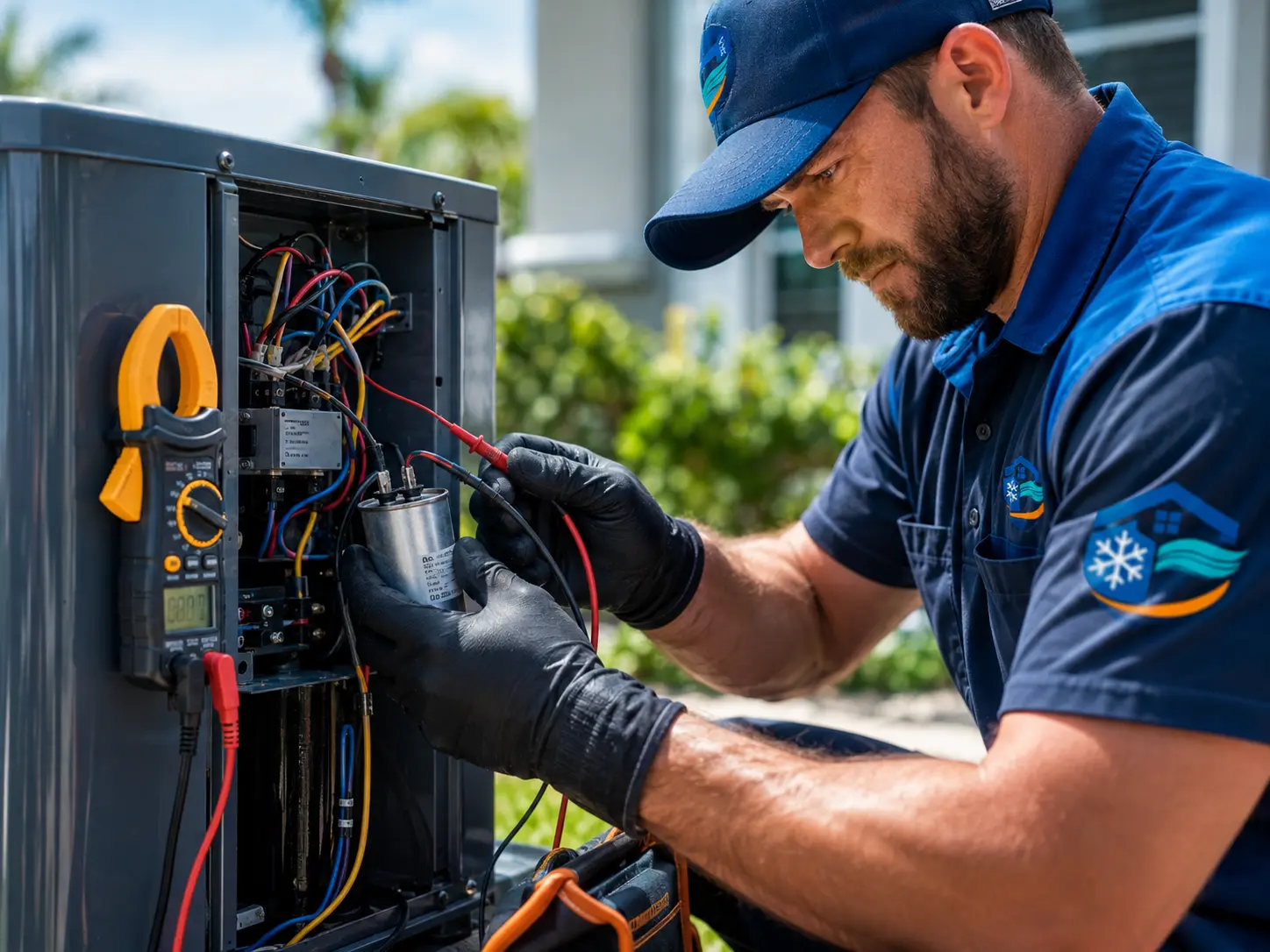
Every AC system has a handful of components that wear out on a predictable timeline regardless of how well the system is maintained: run and start capacitors, contactors, and blower motor bearings among them. In an established area like Trafalgar, where a share of the housing stock has equipment that's been in place for years, these failures are a common reason for a service call — not always a catastrophic compressor failure, but sometimes a small part finally giving out.
A capacitor losing capacitance is a gradual process. The system may start slower than it used to for months before it finally fails to start at all, or the outdoor fan may hum without spinning. Catching a weak capacitor before it fails outright avoids the harder starts that stress the compressor itself.
Duct layouts from an earlier build era
Central Cape Coral's older duct designs were laid out for the equipment and cooling loads of their era, and additions or renovations since then don't always come with a matching duct update. Uneven cooling between rooms, weak airflow at the far end of a hallway, or a system that seems to work harder than its rated capacity suggests are frequently duct issues rather than refrigerant issues, and worth ruling out before assuming the equipment itself is undersized.
What to expect from a diagnostic visit
On an established system, a visit often checks capacitor and contactor condition early, since those are wear items that can fail with age, then moves to airflow and refrigerant charge if the electrical components test fine. That approach can rule out lower-cost causes before assuming a more expensive component is at fault.
Frequently asked questions
01My Trafalgar AC hums but won't start — what's wrong?
A humming compressor or fan that won't spin up is a classic sign of a failed run capacitor. Capacitors are wear items and are one of the more common failures on established systems that have run for several cooling seasons without replacement.
02Is it normal for equipment in this area to be older?
Trafalgar is one of Cape Coral's established central blocks, so a meaningful share of the homes are running equipment that has been in place for a number of years. Age alone isn't a problem, but it does mean wear-item failures — capacitors, contactors, aging insulation — turn up more often than in newer developments.
03Why does one room stay warmer than the rest of the house?
Uneven cooling in established homes is often a duct or return airflow issue rather than a refrigerant problem — a partially disconnected duct, a closed damper, or a return that was never sized generously for the home's layout.
04Should I replace a capacitor myself?
No. Capacitors store an electrical charge even when the system is off, and working near an energized condenser or air handler carries real risk. Capacitor testing and replacement should be handled by a technician.
Related repair services
Related symptoms
Where we publish AC repair information
Cape Coral, FL
A slow start today is a no-start tomorrow.
If your Trafalgar system hesitates, hums, or has been running longer than usual, a capacitor and contactor check can catch the failure before it strands you without cooling.