
Refrigerant + coil repairs
Condenser Coil Repair
- Outdoor coil
- Heat rejection
- Cape Coral, FL
Quick answer
The condenser coil's job is heat rejection: dumping the heat your system collected indoors, plus the heat of compression, out into the outdoor air. When it can't do that efficiently — from debris, corrosion, or fin damage — pressures rise throughout the entire refrigerant circuit.
Cape Coral's coastal air, landscape debris, and dryer vent proximity all put outdoor coils under more stress here than in most climates, making cleaning and inspection a recurring need.
Heat rejection: the coil's actual job
After refrigerant absorbs heat from indoor air at the evaporator coil, the compressor pressurizes it and sends it to the condenser coil outside. There, the condenser fan pulls ambient air across the coil's fins and tubing, allowing the hot refrigerant to release its heat into that airstream and condense back into a liquid. This is the "rejection" side of the refrigeration cycle — everything absorbed indoors has to leave somewhere, and this coil is where it happens.
Anything that reduces airflow across the coil, reduces the coil's surface heat-transfer efficiency, or restricts the fan's ability to move air compromises this process, and the effects show up as rising pressures throughout the system rather than staying isolated to the outdoor unit.
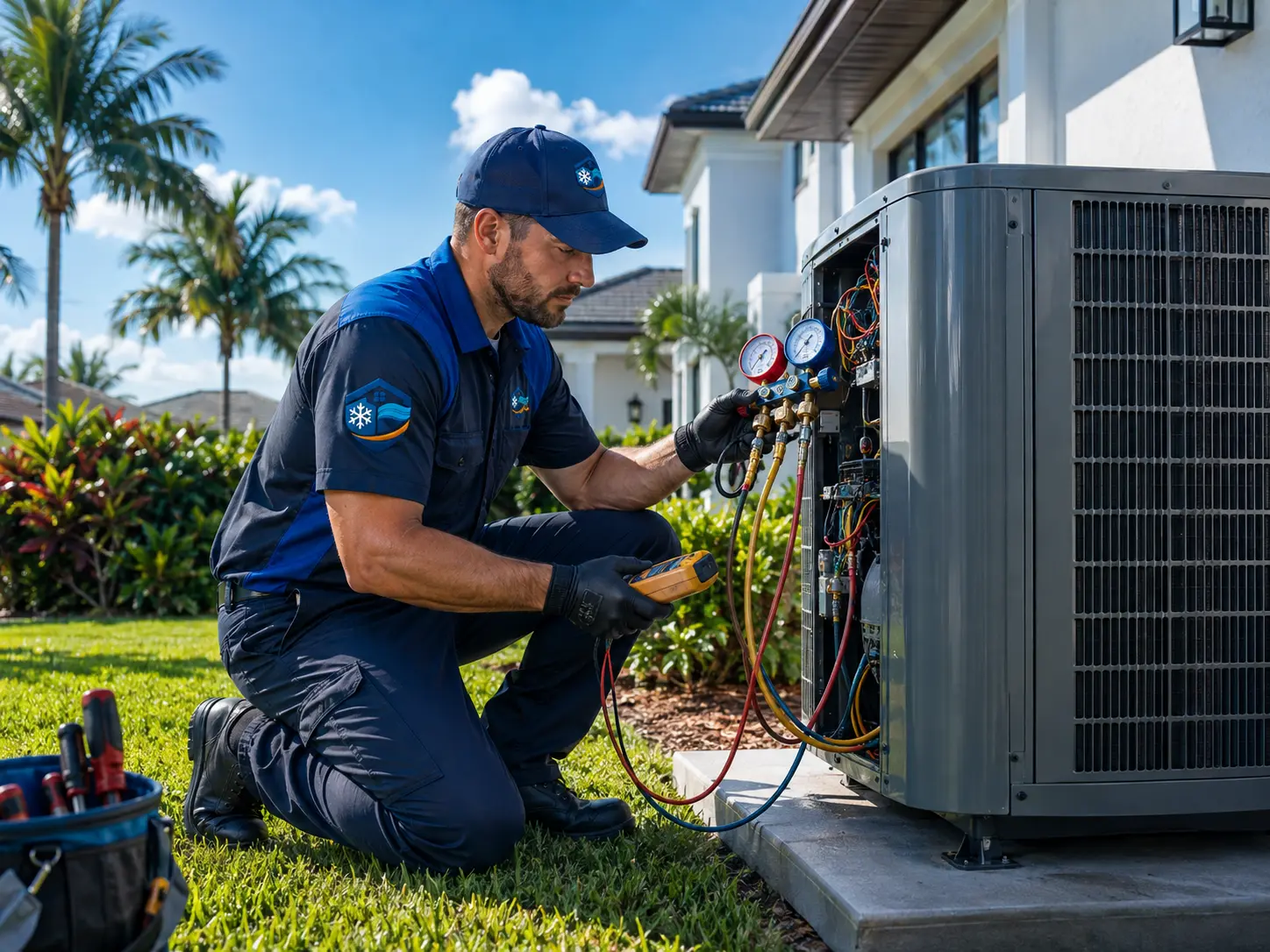
Fin damage and coastal salt corrosion
The thin aluminum fins wrapped around the condenser's copper tubing are easily bent by pressure washing, careless landscaping equipment, or storm debris, and bent fins reduce the surface area exposed to airflow. Cape Coral's proximity to canals, the river, and the Gulf adds a longer-term threat: salt-laden air accelerates corrosion on fins, tubing, cabinet fasteners, and electrical contacts. Corroded fins lose conductivity and can flake or crumble over time, steadily reducing the coil's heat-rejection capacity even before a refrigerant leak develops from the same corrosion.
Landscape debris, dryer lint, and high head pressure
Grass clippings, mulch, leaves, and seed fluff from nearby landscaping settle into the coil fins and block airflow, and a dryer vent positioned too close to the condenser can coat the coil in lint over time. Either source of blockage forces the coil to work with less effective airflow, and the refrigerant can't shed heat as designed.
The result is elevated head pressure — the discharge-side pressure the compressor works against. Sustained high head pressure increases compressor amperage draw and operating temperature, can trip a high-pressure safety switch that shuts the system down, and accelerates long-term wear on compressor components. A coil that looks only mildly dirty can already be having a measurable effect on system pressures.
Cleaning methods, the fan, and clearance
Cleaning starts with clearing loose debris from the fins and cabinet interior, followed by applying a coil cleaning solution and rinsing it through from the inside of the coil outward, pushing contaminants back out the path air normally enters rather than deeper into the fin pack. Lightly bent fins can often be straightened afterward with a fin comb to restore airflow through that section; fins that are crushed or corroded across a large area are usually not worth straightening individually.
None of this matters if the fan can't move air. The condenser fan motor and the coil work as a pair — a weak, slow, or failed fan produces the same high-head-pressure symptoms as a blocked coil, which is why both get checked together. Finally, adequate clearance around the outdoor unit — free of plants, fencing, mulch beds, or stored items pressed up against the cabinet — is necessary for the fan to pull in and discharge air without recirculating its own exhaust heat back through the coil.
Frequently asked questions
01What does the condenser coil actually do?
It rejects the heat the refrigerant absorbed indoors, plus the heat added by compression, out into the outdoor air. The condenser fan pulls air across the coil to carry that heat away. If the coil can't reject heat efficiently, pressures and temperatures rise throughout the whole refrigerant circuit.
02How does salt air near Cape Coral canals affect the condenser coil?
Salt-laden air common near canals, the river, and coastal areas accelerates corrosion on aluminum fins, copper tubing, cabinet fasteners, and electrical contacts. Corroded fins conduct and transfer heat less efficiently, gradually reducing the coil's ability to reject heat even before a leak or structural failure develops.
03What happens if the condenser coil is dirty or blocked?
Debris blocking airflow through the coil — grass clippings, dryer lint, cottonwood-type seed fluff, leaves — raises head pressure because the refrigerant can't shed heat efficiently. High head pressure increases compressor workload and temperature, can trip high-pressure safety switches, and accelerates long-term wear on the compressor.
04How is a condenser coil cleaned?
Loose debris is cleared from the fins and cabinet first, then a coil cleaning solution is applied and rinsed through from the inside out with a hose or low-pressure water, pushing contaminants back out the way air normally enters rather than driving them deeper into the fins.
05Why does clearance around the outdoor unit matter?
The condenser fan needs unobstructed space to pull in air and discharge the heated air it collects from the coil. Plants, fencing, mulch beds, or stored items placed too close restrict airflow the same way debris on the coil does, raising head pressure and reducing the unit's heat-rejection capacity.
06Can bent fins be repaired instead of replacing the coil?
Lightly bent fins can often be straightened with a fin comb to restore airflow through that section. Fins that are crushed extensively, corroded through, or damaged across a large portion of the coil face are usually not worth straightening individually, and coil replacement becomes the more practical option.
07What's the relationship between the fan motor and the coil?
The fan pulls air across the coil to carry away rejected heat; without adequate airflow, the coil can't do its job regardless of its physical condition. A weak or failed fan motor produces the same high-head-pressure symptoms as a dirty or blocked coil, so both are checked together during diagnosis.
Related repair services
Related symptoms
Where we publish AC repair information
Cape Coral, FL
Outdoor coil dirty or corroded?
A blocked or corroded condenser coil drives up head pressure and shortens compressor life. Get it inspected and cleaned properly.