
Water at the air handler
AC Leaking Water: Where It Comes From, Why It Backs Up
- Location: Cape Coral, FL
- Phone: 239-423-5617
- Symptom: Water leak / overflow
Quick answer
Water around the air handler is almost always condensate that isn't draining properly — most often a condensate line clogged with algae and biofilm, though a poorly pitched or disconnected line, a failed float switch, or meltwater from a frozen coil can all cause the same puddle. In Cape Coral's humid climate the system produces a real volume of water daily, so even a partial drain restriction shows up quickly.
Where the water comes from
Condensate volume in a humid climate
Air conditioning cools air by passing it across a cold evaporator coil, and cooling humid air below its dew point condenses moisture out of it — the same process that beads water on a cold glass on a Florida afternoon. That condensed water collects in a drain pan beneath the coil and is supposed to flow continuously out through the condensate drain line to a safe discharge point outside or into a household drain.
Because Cape Coral runs a long cooling season with consistently high humidity, the volume of water a residential system removes from the air is substantial — routinely several gallons per day for an average home, more during the wettest months. That volume means the drain system isn't a minor afterthought; it's handling a real, continuous flow every time the system runs, and even a partial restriction shows up as standing water or overflow far sooner than homeowners expect.
The most common cause
Clogged drains, algae, and biofilm
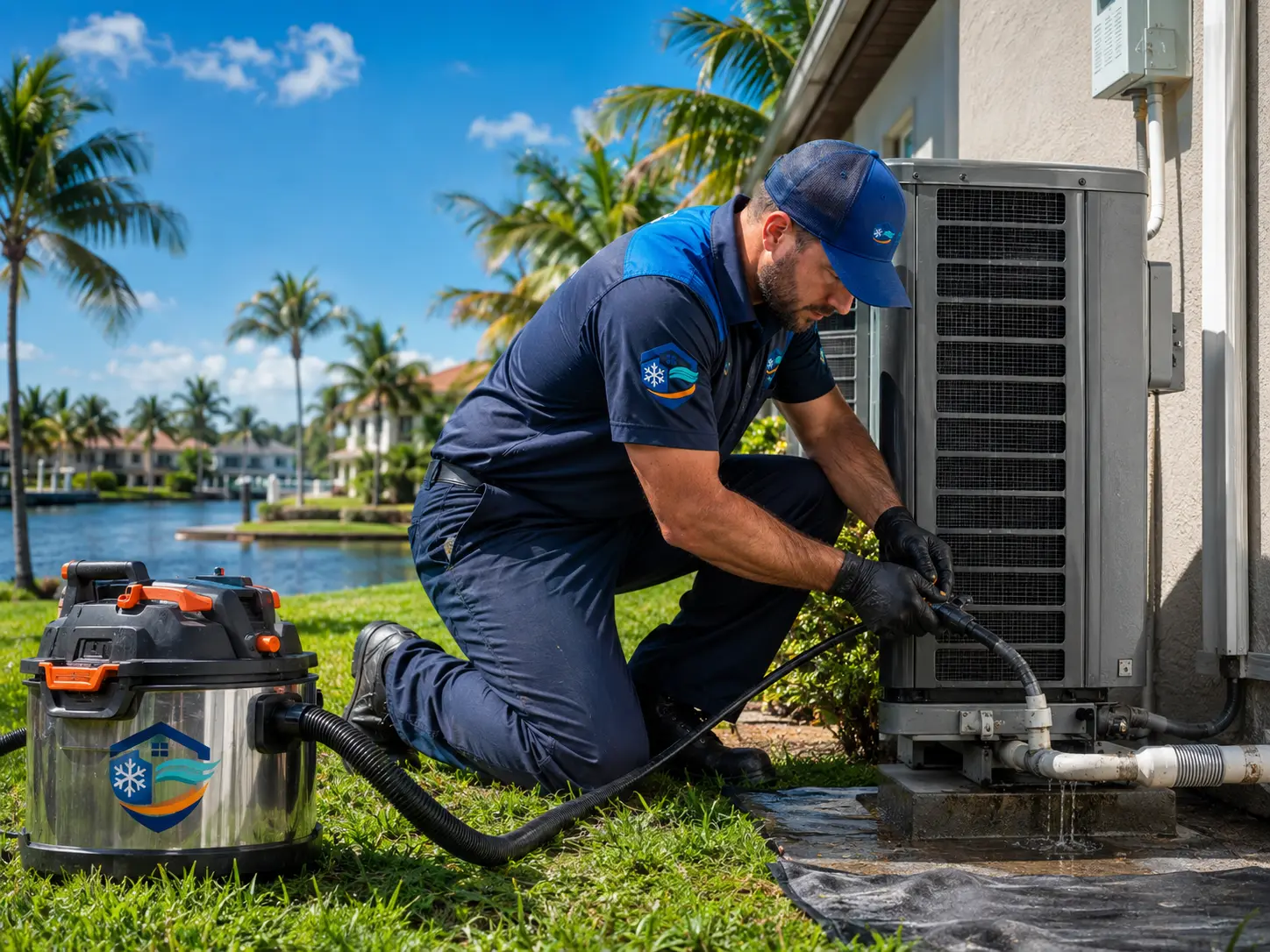
The condensate drain line is warm, wet, dark, and continuously supplied with dust and organic particles pulled from house air — essentially ideal conditions for algae and biofilm growth. Left unaddressed, that growth builds up along the interior walls of the pipe the same way it would in any drain that's never cleaned, gradually narrowing the passage available for water to flow through.
At first, a narrowing drain might just slow the flow rate without causing a visible problem. As the buildup thickens, the line eventually can't keep pace with how much condensate the coil is producing, and water backs up into the primary drain pan. Once that pan fills, water overflows — either into a properly designed secondary pan, or directly onto the surrounding structure if no secondary protection is in place.
This is a maintenance issue as much as a repair issue: a drain line that's cleared periodically rarely gets the chance to build up enough biofilm to fully clog, while one that's never serviced eventually will, especially given the volume of condensate Cape Coral's climate produces.
Beyond a simple clog
Pitch, disconnection, and safety devices
A clear pipe still needs to be sloped correctly to work. Condensate lines rely on gravity — there's no pump forcing the water along in most residential setups — so the line has to run continuously downhill from the drain pan to its discharge point. A line that developed a low spot, or "belly," from settling, an installation error, or being disturbed during other work in the attic, lets water pool at that low point instead of flowing through, which can cause slow leaks or backup even with no algae blockage at all.
A drain line can also simply come apart at a fitting — a joint that was never solvent-welded correctly, or one that's vibrated loose over time — sending condensate straight into the attic or wall cavity instead of to its intended discharge point. This kind of leak can go unnoticed longer than an overflowing pan, since the water may not show up as an obvious puddle right under the air handler.
Secondary pan and float switch
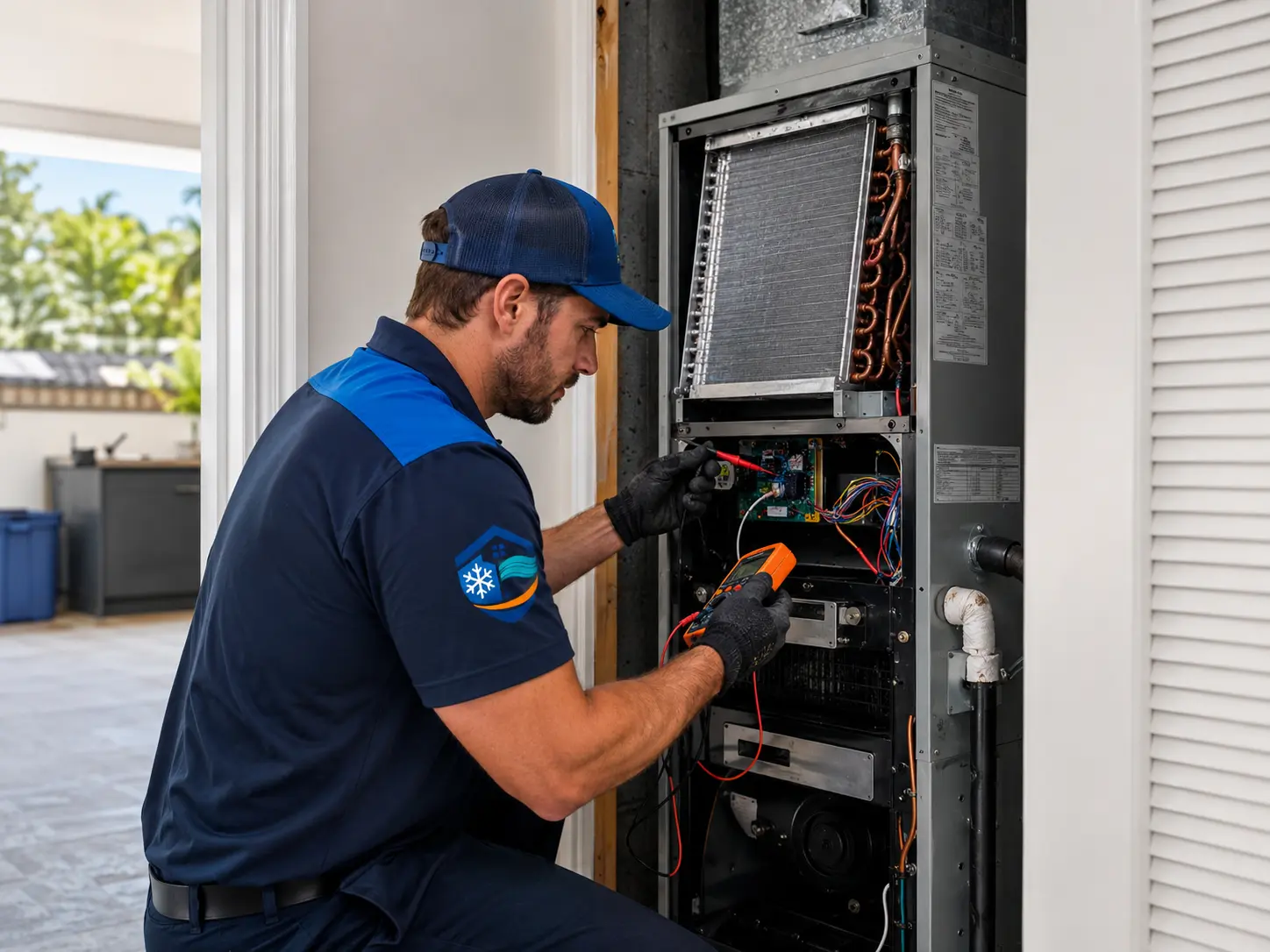
Air handlers installed in attics or above living space are commonly required to include a secondary drain pan beneath the unit, positioned to catch overflow if the primary drain fails and route it to a visible or separately drained location rather than letting it soak into the ceiling below. A float switch, mounted in the primary pan or drain line, is a small safety device that senses rising water and shuts the system off automatically before the pan overflows, stopping the coil from producing more condensate that the failed drain can't handle. A tripped float switch showing up as "system won't run" is often actually a drain problem announcing itself before it causes visible water damage.
Frozen coil and property risk
When melt-off overwhelms a working drain
A coil that's iced over — from restricted airflow or low refrigerant charge — eventually releases that ice as water, whether the system keeps running or is shut off to thaw. That meltwater often arrives faster and in larger volume than the drain pan and line are sized to handle for ordinary condensation, so a leak can appear even when the drain itself has no clog or pitch problem. In that situation, the water leak is a symptom of the freeze-up, and resolving it means addressing the airflow or refrigerant cause behind the ice, not just the drain.
Whatever the underlying cause, the property risk from an unresolved condensate leak grows the longer it continues. A slow, steady drip onto a ceiling below an attic-mounted air handler can stain drywall, warp flooring, and support mold growth well before the leak becomes obvious as visible dripping, since much of the damage happens gradually inside materials rather than as a dramatic event. Treating any water at the air handler as worth investigating promptly — rather than mopping it up and hoping it doesn't return — is the more reliable approach in a climate that produces this much condensate for most of the year.
Frequently asked questions
01Why does my AC produce so much water in the first place?
Cooling humid air condenses moisture out of it, the same way condensation forms on a cold glass. Cape Coral's high year-round humidity means the coil pulls a large volume of water out of the air during normal operation — often several gallons a day for a typical home — and all of that water has to leave through the condensate drain system.
02What's the most common reason water backs up and overflows?
A clogged condensate drain line is the most common cause by far. Algae and biofilm grow inside the drain line's warm, wet, dark environment over time, gradually narrowing the passage until water can't drain as fast as the coil produces it, and it backs up into the drain pan and overflows.
03Why does algae grow inside an AC drain line?
The drain line offers the same conditions algae and biofilm need anywhere else: constant moisture, organic material from dust and airborne particles, warmth, and darkness. Left alone, that buildup narrows the pipe's interior in the same way it would in any drain that never gets cleaned.
04Could a leak be caused by the drain line itself instead of a clog?
Yes. A condensate line that's come loose from its fitting, was never properly sloped, or has developed a low spot ('belly') where water pools instead of flowing continuously toward the drain, can leak or back up even with no clog present. Proper pitch matters as much as a clear pipe.
05What is the secondary pan and float switch for?
The secondary drain pan sits underneath the air handler as a backup catch basin if the primary drain system fails, directing any overflow to a visible location or a separate drain rather than into the ceiling or floor below. The float switch sits in the primary pan or line and shuts the system down automatically when water rises to a set level, stopping the coil from producing more condensate that would otherwise keep overflowing.
06Can a frozen coil cause a water leak too?
Yes. Ice built up on an evaporator coil eventually melts, whether the system is running or has been shut off to thaw. That meltwater is often a larger volume, released faster, than the drain system is used to handling from normal condensation, which can overwhelm the pan and drain even if the drain itself isn't clogged.
07How much damage can a slow drain leak actually cause?
More than people expect, because it's often gradual and hidden. Water dripping steadily onto a ceiling below an attic-mounted air handler can stain drywall, warp flooring, and encourage mold growth well before it becomes obvious as an active drip, since much of the early damage happens inside materials rather than on visible surfaces.
Related repair services
Related symptoms
Cape Coral, FL
Your AC shouldn't be a guessing game.
Describe what the system is doing and get a straight explanation of what needs to happen next.